The Bookkeeper's Shorthand That Accidentally Became America's Most Valuable Word
The Pharmacist's Headache Cure
In the sweltering summer of 1886, Atlanta pharmacist Dr. John Stith Pemberton was desperate. His morphine addiction, a lingering consequence of a Civil War saber wound, had driven him to experiment with various concoctions in search of both personal relief and commercial success. In his backyard kettle, he mixed coca leaf extract with kola nut syrup, creating a dark, syrupy medicine he believed could cure headaches and ease fatigue.
Pemberton had grand plans for his invention, but like many brilliant inventors, he was terrible with names. The scientific-minded doctor probably would have called it something forgettable like "Pemberton's Brain Tonic" or "Extract of Coca and Kola." Fortunately for the future of American advertising, Pemberton's bookkeeper had different ideas.
The Practical Man's Solution
Frank Mason Robinson wasn't hired for his creative genius—he was hired to keep the books straight. A methodical man with precise handwriting, Robinson approached the naming challenge with the same practical mindset he brought to balancing ledgers. Looking at Pemberton's formula, he saw two main ingredients: coca leaves and kola nuts.
Instead of crafting an elaborate marketing name, Robinson simply wrote down what he saw: "Coca-Cola." To his orderly mind, it was pure logic—describe the contents, separate them with a hyphen, done. He even suggested the double-C combination would "look well in advertising," though this was more about visual symmetry than marketing sophistication.
Robinson had no focus groups, no brand consultants, no market research. He just wanted a clear way to identify the product in his accounting records. Yet in that moment of practical simplicity, he accidentally created what would become the most recognized brand name in human history.
The Handwriting That Launched an Empire
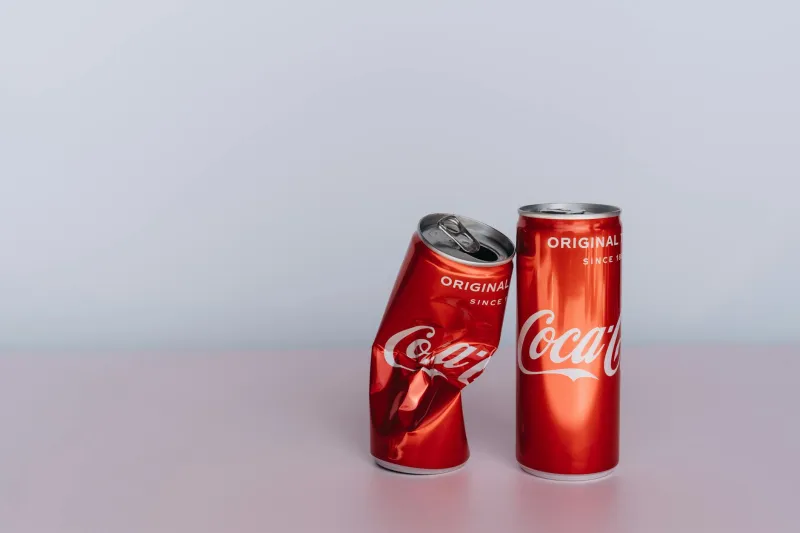
Robinson's contribution didn't stop at the name. His flowing Spencerian script—the standard business handwriting of the era—became the foundation for the Coca-Cola logo we know today. When he penned "Coca-Cola" in his elegant cursive, he was simply following the penmanship rules taught in every American business school.
That handwritten logo first appeared in the Atlanta Journal on May 29, 1886, advertising "Coca-Cola: The New and Popular Soda Fountain Drink." Robinson paid for the ad himself—a $1.50 investment that would eventually be worth billions. The ornate script wasn't designed by a graphic artist; it was just how businessmen were expected to write.
From Ledger Entry to Global Icon
The early years of Coca-Cola proved that Robinson's accidental branding genius worked better than anyone imagined. While competitors struggled with forgettable names like "Koke" and "Dope" (yes, that was a real competitor), "Coca-Cola" rolled off the tongue with musical ease.
The name's rhythm—those four syllables with the double-C alliteration—made it perfect for the emerging world of mass advertising. Radio announcers loved it, jingle writers embraced it, and consumers remembered it effortlessly. What Robinson thought was simple description turned out to be pure marketing gold.
By 1895, Coca-Cola was being sold in every American state and territory. The handwritten logo remained virtually unchanged, even as the company grew from Pemberton's backyard operation into a global corporation. Robinson's practical penmanship became so iconic that when Coca-Cola introduced New Coke in 1985, public outrage focused as much on the potential logo change as the recipe modification.
The Accident That Defined American Branding
Today, the Coca-Cola name and logo are valued at over $80 billion—making Robinson's ledger entry possibly the most valuable piece of handwriting in business history. Brand consultants now spend millions trying to recreate what he accomplished with common sense and good penmanship.
The story reveals something profound about American commerce: sometimes the best branding happens when you're not trying to brand at all. Robinson's straightforward approach—describe what you're selling, make it look professional, keep good records—accidentally created a template that countless companies still follow.
The Legacy of Practical Genius
Frank Robinson died in 1922, long before Coca-Cola became the global phenomenon we know today. He never saw his handwriting on billboards in Times Square or recognized his naming logic in the world's most expensive advertising campaigns. To him, "Coca-Cola" was always just a practical solution to a simple problem.
Yet every time someone orders a Coke, they're participating in Robinson's accidental masterpiece. His bookkeeper's shorthand became the sound of American capitalism itself—proof that sometimes the most powerful brands come not from marketing departments, but from the practical wisdom of someone just trying to keep the books straight.
The next time you see that familiar script logo, remember: you're looking at the most successful accident in advertising history, written by a man who was just trying to do his job.