The Failed Sandwich That Mastered the Art of Disappearing: How McDonald's McRib Became America's Most Brilliant Marketing Accident
The Sandwich That Nobody Wanted
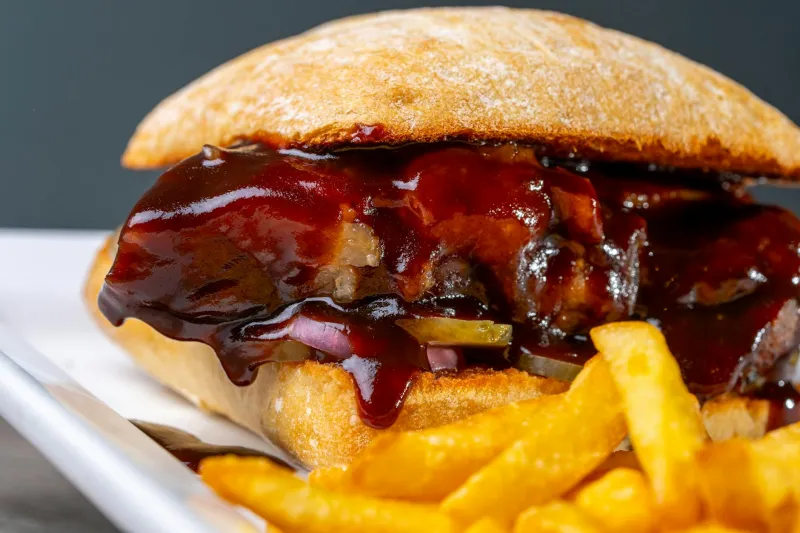
In the summer of 1981, McDonald's executives were convinced they had their next Big Mac on their hands. The McRib—a molded pork patty shaped like a rack of ribs, slathered in tangy barbecue sauce, topped with onions and pickles on a hoagie roll—seemed like a slam dunk. It combined America's love affair with barbecue with the convenience of fast food.
Then reality hit. Hard.
Customers weren't just indifferent to the McRib—they actively avoided it. Sales figures were so dismal that by 1985, McDonald's had quietly removed it from most locations across the country. What seemed like a sure-fire hit had become one of the company's most spectacular failures.
But here's where the story gets interesting: that failure accidentally taught McDonald's the most powerful marketing lesson in fast food history.
Born from Surplus and Nostalgia
The McRib's origin story begins not in a test kitchen, but in the economics of meat processing. In the late 1970s, pork prices had plummeted due to oversupply, making it an attractive alternative to the more expensive beef that dominated McDonald's menu. The company partnered with a food processing company to develop a way to turn cheap pork trimmings into something that looked and felt like a premium barbecue experience.
The solution was ingenious from a manufacturing standpoint: restructured meat technology that could mold ground pork into any shape. They chose ribs because focus groups showed Americans associated barbecue ribs with comfort, tradition, and indulgence—emotions McDonald's wanted to capture in a handheld format.
René Arend, the same McDonald's chef who created Chicken McNuggets, developed the McRib's distinctive shape and flavor profile. He was trying to tap into regional American barbecue traditions, particularly the tangy, sweet sauce styles popular in Kansas City and Memphis.
The Flop That Changed Everything
But regional nostalgia couldn't overcome a fundamental problem: the McRib looked weird. The molded pork patty, despite being shaped like ribs, contained no bones. Customers found it confusing and unappetizing. The sauce was too sweet for some markets, too tangy for others. And at a time when McDonald's brand was built on consistency and familiarity, the McRib felt like an odd outlier.
Sales data from 1981-1985 tells the story: the McRib performed worst in McDonald's core markets. Suburban families, the chain's bread and butter, weren't buying it. The sandwich lingered on menus in underperforming locations, more out of corporate stubbornness than customer demand.
McDonald's seemed ready to write off the McRib as an expensive lesson in market research. Then something unexpected happened.
The Accidental Discovery of Manufactured Scarcity
In 1994, McDonald's brought back the McRib for a limited time in select markets. The company's reasoning was purely practical: they had excess pork inventory to move and figured they might as well try to recoup some of their original investment.
But this time, something was different. Customers who remembered the McRib from the 1980s—and had maybe tried it once or twice—suddenly developed an intense craving for it. The limited availability created urgency. People drove across town to find locations that still had it. They stockpiled multiple sandwiches. They talked about it on early internet forums.
McDonald's had accidentally stumbled onto one of the most powerful principles in consumer psychology: scarcity creates desire.
The Psychology of the Impossible Burger
What McDonald's discovered was that the McRib's greatest weakness—its initial unpopularity—had become its greatest strength. Because most people had only vague memories of trying it years earlier, the sandwich had taken on an almost mythical quality. It wasn't just food; it was a nostalgic experience that existed just out of reach.
The company began studying the phenomenon. They realized that bringing back the McRib created more buzz than launching entirely new menu items. Food bloggers wrote about McRib sightings. Fans created websites tracking which locations had it in stock. The sandwich that had once been McDonald's most forgettable menu item had become its most talked-about.
Mastering the Art of Strategic Absence
By the 2000s, McDonald's had turned McRib releases into a science. They studied pork futures markets, timing releases when prices were low and profits high. They analyzed social media sentiment, bringing back the sandwich when online chatter reached certain thresholds. They mapped geographic preferences, targeting regions where previous releases had performed best.
Most importantly, they learned to keep it scarce. The McRib never stays on the menu long enough for the novelty to wear off. It appears just long enough to satisfy immediate craving, then disappears before customers can get tired of it.
The Cult of Calculated Craving
Today, McRib releases are cultural events. The sandwich has its own Twitter account. Food media covers its return like breaking news. Fans plan road trips around McRib availability maps.
None of this was intentional. McDonald's set out to create a permanent menu item that would compete with the Big Mac. Instead, they accidentally discovered that in the attention economy, absence can be more powerful than presence.
The McRib taught McDonald's—and the entire fast food industry—that you don't need customers to love your product. You just need them to think they might miss it forever. Sometimes the best way to make people want something is to take it away.
In a world of infinite choices and constant availability, the McRib's power lies in its strategic scarcity. It's not just a sandwich—it's a masterclass in manufactured desire, born from one of fast food's most spectacular failures.