The Merchant's Inventory Nightmare That Invented American Romance
The Import Business That Went Horribly Wrong
In the winter of 1847, Esther Howland stood in her father's Worcester, Massachusetts stationery shop, staring at a mountain of expensive mistake. Boxes upon boxes of delicate paper lace, silk ribbons, and gold embossing filled every available corner. She had intended to import a modest selection of English valentine cards for the upcoming February holiday, but somewhere between London suppliers and Boston shipping, her small order had become an overwhelming inventory crisis.
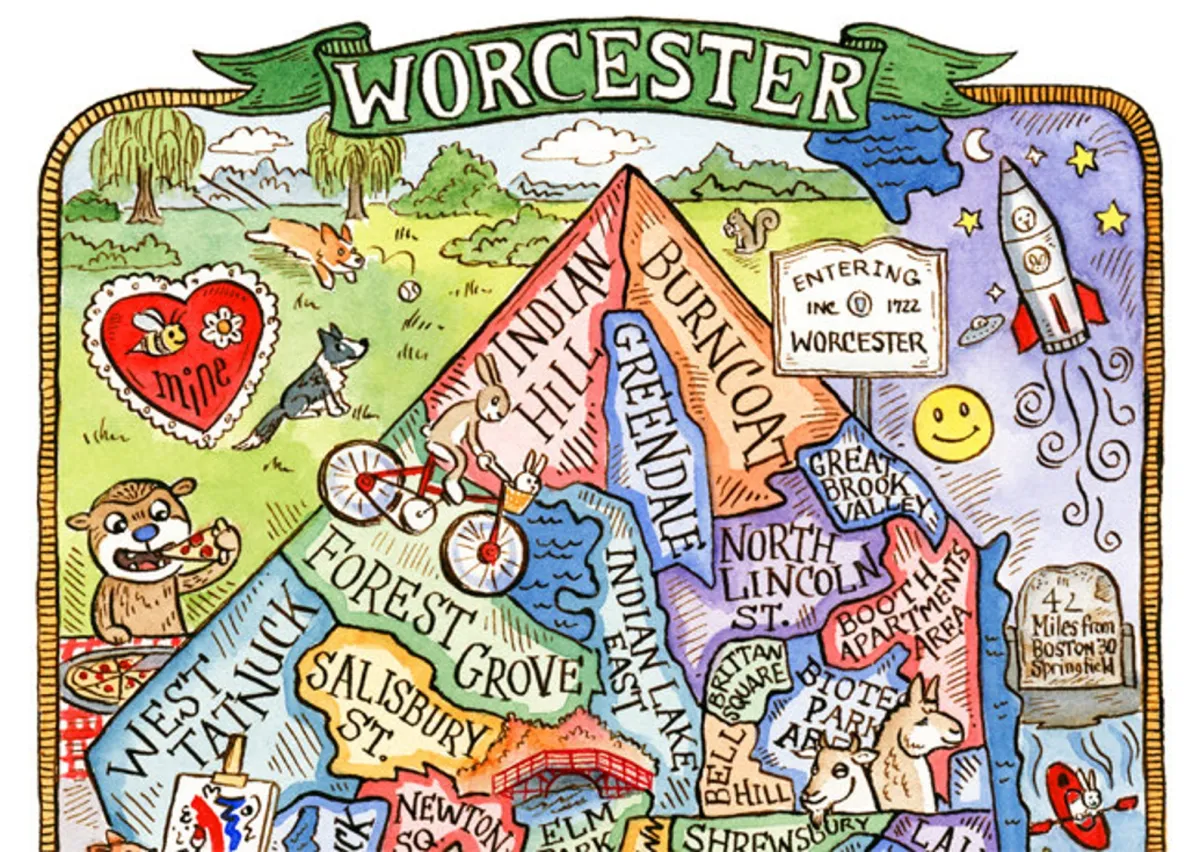 Photo: Worcester, Massachusetts, via i.etsystatic.com
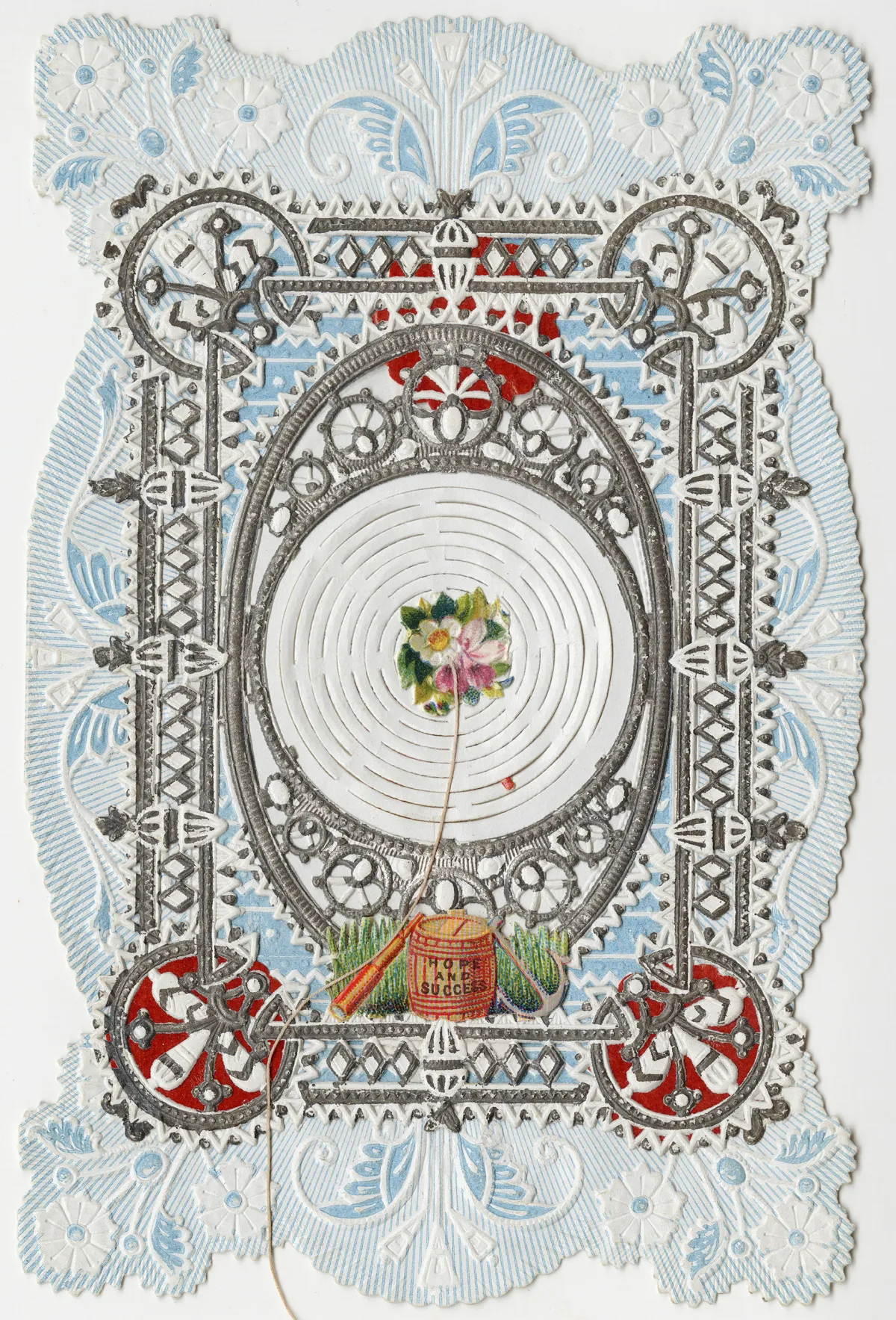 Photo: Esther Howland, via api.time.com
The elaborate valentine cards popular among English aristocracy were beautiful—layers of hand-cut paper lace, tiny silk flowers, and romantic verses written in flowing script. But they were also expensive, selling for what a factory worker made in a day. Howland had calculated she might sell perhaps fifty cards to wealthy Boston society ladies. Instead, she found herself the reluctant owner of enough materials to make thousands.
With Valentine's Day just weeks away, Howland faced a choice: absorb a devastating financial loss or find a way to move product fast. Her solution would accidentally transform an obscure European custom into America's most enduring romantic tradition.
When Assembly Lines Met Cupid
Howland's breakthrough came from an unlikely source: the textile factories spreading across New England. She had watched these operations turn individual cotton threads into finished fabric using coordinated teams of workers, each performing a single specialized task. What if the same principle could apply to greeting card production?
Setting up operations in her family's home, Howland recruited friends and neighbors to form America's first greeting card assembly line. One woman cut paper lace patterns. Another attached silk flowers. A third wrote romantic verses in careful script. The final worker assembled everything into finished cards.
This division of labor allowed Howland to produce cards at a fraction of the cost of imported English versions. More importantly, it let her experiment with designs specifically tailored to American tastes. Instead of formal aristocratic sentiments, she created cards with playful messages about courtship, marriage, and domestic life that resonated with middle-class American couples.
The Accidental Democracy of Romance
Howland's mass-production approach did something revolutionary: it democratized romantic expression. Before her assembly line, elaborate valentine cards were luxury items accessible only to the wealthy. Her efficient production methods brought the price down to levels affordable for clerks, shopkeepers, and skilled workers.
Suddenly, American men who could never afford expensive imported cards could participate in the valentine tradition. Young couples could exchange tokens of affection without bankrupting themselves. The romantic gesture that had been restricted to social elites became available to anyone with a few spare coins.
This accessibility transformed the meaning of Valentine's Day itself. In England, the holiday remained a formal aristocratic custom, observed by a tiny slice of society. In America, Howland's affordable cards turned it into a popular celebration that crossed class boundaries.
Building the Romance Industry
By 1850, Howland's operation had outgrown her family home. She established a proper factory in Worcester, employing dozens of workers and producing over 100,000 cards annually. Her success inspired competitors across New England, creating an entire industry dedicated to manufacturing romantic sentiment.
These early greeting card companies didn't just copy Howland's assembly line approach—they improved on it. They developed new printing techniques that could reproduce intricate lace patterns without hand-cutting. They created embossing processes that added texture and depth to mass-produced cards. They even pioneered color printing methods that made affordable cards nearly as beautiful as expensive handmade versions.
The competition drove continuous innovation in both manufacturing and design. Companies raced to create cards that were cheaper, more beautiful, and more emotionally resonant than their rivals. This competitive pressure accelerated the development of what would become modern greeting card design principles.
How Inventory Problems Created Cultural Habits
Howland's inventory crisis had accidentally solved a much larger cultural problem. Nineteenth-century American society was rapidly urbanizing, with young people moving away from traditional communities where romantic relationships were managed by families and neighbors. Urban couples needed new ways to express affection and navigate courtship without traditional social support systems.
Affordable valentine cards provided a perfect solution. They offered scripted romantic language for people who struggled to express their feelings. They created socially acceptable ways to initiate romantic relationships. They even provided plausible deniability—a rejected suitor could claim the card was just a friendly gesture.
The cards also served practical functions in an era before reliable postal service. Many included space for personal messages, turning them into combination gifts and letters. Others featured elaborate pop-up mechanisms or hidden compartments that made them entertaining keepsakes rather than disposable items.
The $24 Billion Accident
Today, Americans purchase approximately 190 million Valentine's Day cards annually, generating over $1 billion in sales for that holiday alone. The broader greeting card industry—encompassing birthdays, holidays, sympathy, and countless other occasions—generates over $24 billion yearly.
This massive industry traces its origins directly to Howland's desperate attempt to clear excess inventory. Her assembly line production methods became the foundation for modern greeting card manufacturing. Her focus on affordable, accessible romantic expression established the cultural expectation that Americans should mark romantic occasions with purchased cards.
Even the basic design principles of modern greeting cards—layered paper, embossed text, fold-out mechanisms, and sentimental verses—derive from innovations developed during those frantic weeks in 1847 when Howland was trying to move product before Valentine's Day.
Why an Inventory Crisis Still Shapes Romance
Every February 14th, millions of Americans participate in a tradition that exists because a Massachusetts businesswoman accidentally ordered too much lace. Howland's inventory problem created not just an industry, but a fundamental shift in how Americans express romantic feelings.
Before Howland's mass-production breakthrough, romantic expression was largely improvised and personal. After her success, it became increasingly standardized and commercial. Modern Americans expect romantic gestures to involve purchased items—cards, flowers, jewelry, restaurant meals—rather than purely personal expressions.
This commercialization of romance has critics, but it also serves important social functions. Greeting cards provide emotional vocabulary for people who struggle with direct expression. They create shared cultural rituals that help maintain relationships. They even preserve romantic traditions across generations, ensuring that each new cohort of Americans learns expected patterns of romantic behavior.
All because a nineteenth-century entrepreneur had way too much decorative paper to sell.