The Laboratory Mistake That Colored a Generation's Childhood
The Teenager Who Changed Color Forever
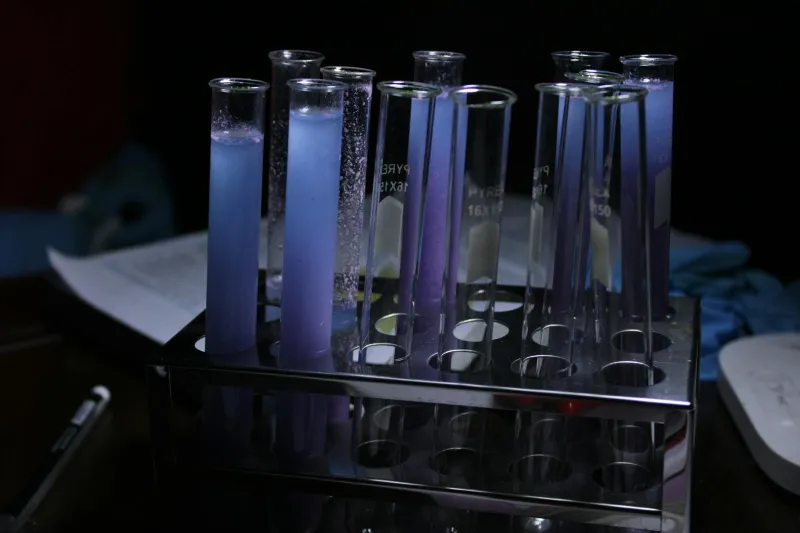
In the spring of 1856, eighteen-year-old William Henry Perkin was alone in his makeshift laboratory above his family's home in London, trying to synthesize quinine—the precious antimalarial drug that could save British soldiers in tropical colonies. Instead of the clear, medicinal compound he expected, his glass beaker filled with a murky, dark sludge that seemed utterly worthless.
Most chemists would have dumped the mess and started over. Perkin, curious and perhaps a bit stubborn, decided to investigate. When he added alcohol to clean the beaker, something magical happened: the sludge dissolved into the most brilliant purple solution he'd ever seen. He had accidentally created mauveine, the world's first synthetic dye.
From Silk Scarves to Soda Fountains
Perkin's purple dye revolutionized fashion almost immediately. Queen Victoria herself wore a mauveine-dyed gown to her daughter's wedding in 1858, sparking a "mauve mania" that swept through Victorian society. But the real transformation was happening in chemistry labs around the world, where Perkin's accident had opened the door to an entirely new industry: synthetic colors.
By the 1880s, chemists were producing dozens of artificial dyes in every imaginable shade. These weren't just prettier than natural colors—they were cheaper, more consistent, and far more stable. Food manufacturers took notice, especially as America's growing cities created demand for packaged goods that could sit on shelves for weeks without fading.
The Grape That Never Was
Here's where the story takes an unexpected turn: the purple color that Americans associate with grape flavor has almost nothing to do with actual grapes. Real grape juice ranges from deep red to pale green, depending on the variety. The vivid purple that defines grape soda, grape candy, and grape drink mixes comes directly from synthetic dyes descended from Perkin's accidental discovery.
The connection happened gradually through the early 1900s. Beverage companies needed colors that would grab attention on crowded store shelves and remain vibrant under harsh electric lighting. Natural grape colors were too subtle and inconsistent. But those brilliant synthetic purples—descendants of mauveine—were perfect. They screamed "grape" louder than any real grape ever could.
The Psychology of Purple
Food scientists discovered something fascinating: Americans began associating that specific shade of synthetic purple with grape flavor so strongly that it actually influenced taste perception. In blind taste tests, people consistently rated purple-colored drinks as more "grape-like" than identical drinks in other colors, even when the flavoring was exactly the same.
This psychological connection became so powerful that when companies tried to use more natural colors for grape products, sales plummeted. Consumers complained the products "didn't taste right," even though only the color had changed. The synthetic purple had become more "authentic" than authenticity itself.
Chemistry Meets Nostalgia
By the 1950s, that particular shade of purple had become embedded in American childhood. It was the color of grape Kool-Aid, grape popsicles, and those small wax bottles filled with sweet syrup that every corner store carried. An entire generation grew up associating that laboratory-created color with summer afternoons and birthday parties.
The irony is profound: one of America's most nostalgic flavors—grape—is actually one of our most artificial. The color that triggers memories of "natural" childhood treats was born from a teenager's failed chemistry experiment in Victorian London.
The Hidden Chemistry of Everyday Life
Perkin's accidental purple reveals something important about how the industrial world shapes our most basic experiences. The line between "natural" and "artificial" isn't as clear as we imagine. That grape drink color feels authentic to us not because it matches nature, but because it matches our memories—memories built on decades of synthetic chemistry.
Today, food manufacturers use advanced versions of synthetic dyes that trace their lineage back to Perkin's laboratory accident. The specific purple used in grape products is typically a blend of Red Dye #40 and Blue Dye #1, both petroleum-derived chemicals that would be completely unrecognizable to someone from the pre-synthetic era.
The Lasting Legacy of a Laboratory Mistake
William Henry Perkin died in 1907, having founded an entire industry and changed fashion forever. But his most enduring legacy might be something he never intended: the color of American childhood. Every time someone opens a bottle of grape soda or unwraps a purple candy, they're experiencing the distant echo of an eighteen-year-old's failed experiment.
That brilliant purple—born from a mistake, refined by industry, and embedded in culture—shows how the most ordinary things often have the most extraordinary origins. Sometimes the accidents that seem like failures become the foundations of entire experiences, coloring not just our products but our memories themselves.