The Medicinal Alcohol Experiment That Accidentally Created Happy Hour
When Drinking Was Literally Doctor's Orders
In 1806, a New York newspaper published what may have been the first definition of a "cocktail" in American print: "a stimulating liquor composed of spirits of any kind, sugar, water, and bitters." The description reads less like a party drink and more like a prescription—which, in many ways, it was.
The early American cocktail wasn't born in celebration but in desperation. In a country where clean water was unreliable, medical knowledge was primitive, and alcohol was often safer to drink than anything coming out of a well, the line between medicine and recreation blurred beyond recognition.
What we now call "cocktail culture" actually started as a massive public health workaround, disguised as social drinking.
The Apothecary Who Couldn't Spell French
The most persistent origin story of the cocktail traces back to Antoine Peychaud, a Creole apothecary who fled Haiti for New Orleans in the 1790s. Peychaud ran a pharmacy on Royal Street where he dispensed a popular stomach remedy: cognac mixed with his secret blend of aromatic bitters.
Peychaud served his medicinal mixture in a double-ended egg cup called a "coquetier"—French for eggcup. American customers, struggling with French pronunciation, allegedly corrupted "coquetier" into "cocktail." Whether this etymology is accurate remains hotly debated among cocktail historians, but it captures something essential about early American drinking: the confusion between medical treatment and recreational consumption.
Peychaud's customers weren't coming to his pharmacy to get drunk. They were seeking relief from stomach ailments, digestive problems, and the general malaise that came from living in a pre-antibiotic world. The fact that his medicine happened to be delicious and mildly intoxicating was considered a pleasant side effect, not the primary attraction.
The Water Problem Nobody Talks About
To understand why Americans embraced medicinal alcohol so enthusiastically, you need to understand the state of American water supplies in the early 1800s. Urban wells were routinely contaminated with sewage, industrial runoff, and decomposing organic matter. Rural water sources weren't much better, often carrying diseases like cholera, typhoid, and dysentery.
Alcohol, by contrast, was relatively safe. The distillation process killed most harmful bacteria, and the alcohol content prevented new contamination. For many Americans, drinking spirits wasn't just socially acceptable—it was a survival strategy.
This created a unique cultural situation where alcohol consumption was both medically justified and socially necessary. Taverns and apothecaries began to overlap in function, serving drinks that were simultaneously recreational and therapeutic.
The Bitters Boom and the Birth of Mixology
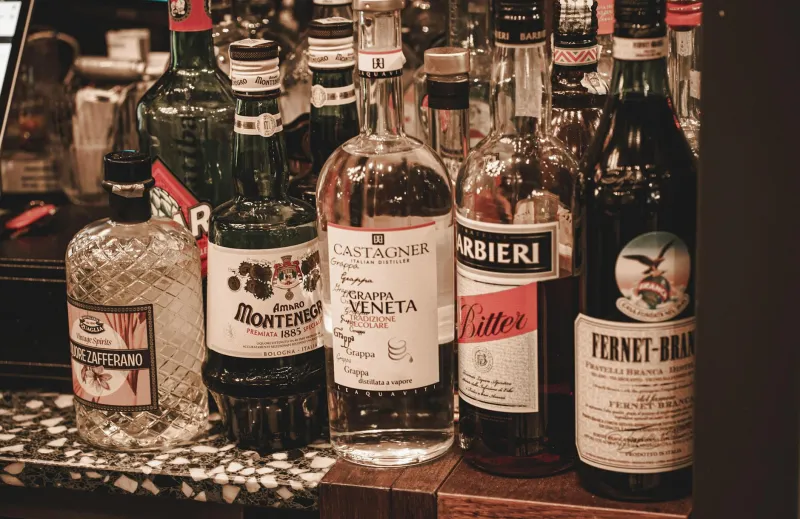
By the 1840s, America was experiencing what historians call the "bitters boom." Hundreds of patent medicine companies were producing alcohol-based tonics, each claiming to cure everything from indigestion to melancholy. These products had names like "Hostetter's Celebrated Stomach Bitters" and "Dr. Henley's Wild Grape Root IXL Bitters."
The marketing was brilliant: customers could purchase what was essentially flavored whiskey while maintaining the pretense that they were buying medicine. Bartenders—many of whom had originally trained as apothecaries—began experimenting with different combinations of spirits and bitters, creating increasingly sophisticated flavor profiles.
This is where modern mixology was actually born: in the overlap between medical practice and hospitality service. Bartenders weren't just serving drinks; they were compounding medications, dispensing remedies, and providing what we'd now recognize as primitive healthcare services.
The Civil War Catalyst
The American Civil War accelerated the evolution from medicinal alcohol to recreational cocktails in unexpected ways. Military surgeons regularly prescribed whiskey for pain relief, shock treatment, and general morale maintenance. Soldiers developed sophisticated tastes for different types of spirits and returned home with expanded drinking vocabularies.
More importantly, the war created a generation of young men who had learned to associate alcohol consumption with camaraderie, stress relief, and social bonding rather than just medical necessity. When these veterans returned to civilian life, they brought their drinking culture with them, transforming American taverns from medical dispensaries into social gathering places.
The Accidental Invention of the American Bar Menu
By the 1870s, American bartenders had developed an elaborate repertoire of mixed drinks, each with specific names, ingredients, and preparation methods. The "Sazerac" (evolved from Peychaud's original remedy), the "Old Fashioned" (a reaction against overly complicated new cocktails), and the "Manhattan" (possibly invented at New York's Manhattan Club) represented the transformation of medical compounds into cultural artifacts.
What's remarkable is how accidental this transformation was. Nobody set out to create cocktail culture. Bartenders were simply trying to make medicinal alcohol taste better, customers were trying to justify their drinking habits with health claims, and entrepreneurs were trying to circumvent various licensing laws by selling "medicine" instead of "alcohol."
The modern bar menu—with its careful categorization of cocktails, detailed ingredient lists, and elaborate presentation—directly descends from apothecary practices. The jigger, the mixing glass, the bar spoon: all of these tools originated in pharmaceutical preparation, not culinary arts.
The Cultural Hangover
By the time Prohibition arrived in 1920, cocktail culture had become so embedded in American social life that the medical origins were largely forgotten. What had started as a public health workaround had evolved into a sophisticated cultural practice with its own rituals, vocabulary, and social significance.
The irony is perfect: America's most celebrated contribution to global drinking culture—the cocktail—emerged not from celebration but from the intersection of bad water, questionable medicine, and creative bartending. The next time you order a craft cocktail at a trendy speakeasy, remember that you're participating in a tradition that started with people trying to make their stomach medicine taste less terrible.
Sometimes the best parties begin with the worst problems.