How a Government-Issue Combat Jacket Became the Uniform of American Rebellion
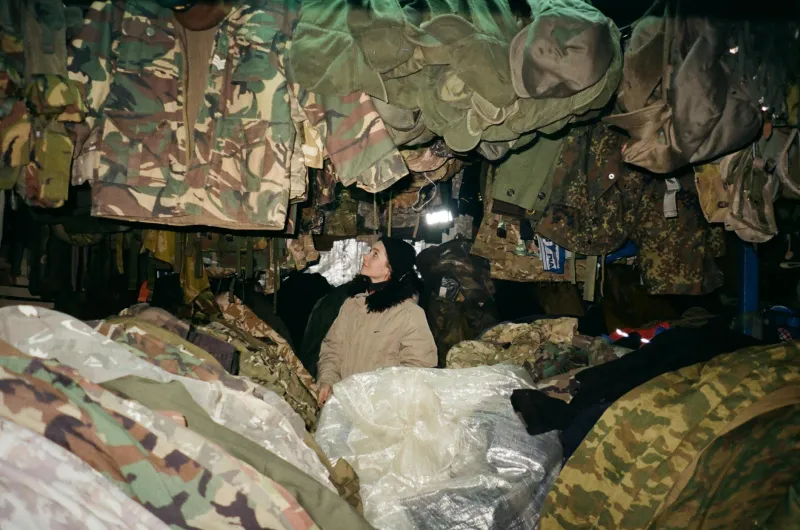
How a Government-Issue Combat Jacket Became the Uniform of American Rebellion
The United States Army did not design the M-65 field jacket to look cool. It was designed to keep soldiers warm in cold weather, shed rain without adding too much weight, and survive the kind of punishment that combat environments deliver. It had a hood that stuffed into the collar, four front pockets, and a button-up wind flap. It came in olive drab. That was pretty much the whole vision.
Somehow, over the course of about seven decades, that utilitarian piece of government-issue gear became one of the most culturally loaded garments in American history — worn by outlaws, artists, protesters, rockstars, and teenagers who just wanted to look like all of the above.
Nobody planned that. It just happened, one subculture at a time.
The Flood After the War
When World War II ended in 1945, the U.S. military was sitting on an almost incomprehensible stockpile of surplus equipment. Uniforms, boots, tents, canteens, parachutes, and jackets — millions of items that the Army no longer needed. The government sold it off cheap. Army-Navy surplus stores popped up across the country, and for a few dollars, any American could walk out wearing the same gear that had just helped win the biggest war in history.
For working-class young men especially, this was a revelation. Quality clothing was expensive. Surplus military gear was tough, well-made, and almost free. The leather A-2 bomber jacket — originally worn by Army Air Corps pilots — was among the most coveted items. So was the MA-1 flight jacket, a nylon bomber that would become iconic in its own right. And later, when the M-65 field jacket was introduced in 1965 and began cycling through the Vietnam-era military supply chain, it too found its way into civilian hands.
But the price wasn't the only reason young Americans reached for these jackets. There was something else going on.
The Biker Clubs Rewrote the Meaning
In the late 1940s, a new kind of American figure emerged: the motorcycle outlaw. Veterans who'd come home from the war restless, disillusioned, or simply unwilling to slot back into quiet civilian life formed motorcycle clubs and rode. They wore what they had — which often meant military surplus leather jackets, repurposed and personalized with patches, club names, and insignia.
The 1947 Hollister motorcycle rally in California, which ended in minor disorder but was reported by the press as a full-scale riot, crystallized the image. A staged photo of a biker slumped on a motorcycle surrounded by beer bottles ran in Life magazine and burned the leather-jacketed rebel into the American imagination. Marlon Brando wore a similar jacket in The Wild One in 1953. James Dean wore a red windbreaker in Rebel Without a Cause two years later. The template was set: the jacket meant you didn't follow the rules.
What's interesting is that the jacket itself hadn't changed. The Army still issued the same basic designs. The meaning was entirely invented by the people wearing them.
Vietnam and the Weight of History
By the late 1960s and early 1970s, the M-65 field jacket had taken on a completely different kind of cultural charge. Vietnam veterans returning home — many of them angry, many of them broken, almost all of them unwelcome in the way that earlier veterans had been welcomed — kept wearing their field jackets in civilian life. Sometimes out of habit. Sometimes because they couldn't afford anything else. Sometimes as a statement.
Anti-war protesters picked up the same jacket and wore it to demonstrations. The garment that had been designed to send young men into combat became, paradoxically, a symbol of resistance to the war that had defined a generation. Veterans and protesters sometimes stood on opposite sides of an argument while wearing the same coat.
That contradiction — the jacket meaning both sacrifice and protest, both service and dissent — became part of what made it so enduring. It could hold multiple meanings at once.
Punk, Hip-Hop, and the Endless Reinvention
In the late 1970s, punk kids in New York and London covered surplus military jackets in band patches, safety pins, and hand-drawn slogans. The jacket became a canvas for exactly the kind of anti-establishment energy it had been absorbing for thirty years.
Then, in the 1980s and 1990s, hip-hop culture claimed it. The oversized MA-1 bomber and the M-65 field jacket became staples of street style in New York, Los Angeles, and Chicago — worn by artists like LL Cool J, members of N.W.A, and later adopted by the entire streetwear ecosystem that would eventually reshape global fashion. Military surplus, which had started as cheap practical clothing for working-class Americans, was now being referenced by luxury designers and sold in boutiques for hundreds of dollars.
The Army jacket appeared on fashion runways. It appeared in music videos. It appeared on the backs of film characters ranging from Travis Bickle in Taxi Driver to the cast of Stranger Things, each time carrying slightly different meaning but always carrying some meaning — always signaling something about being on the outside, about refusing to fully conform, about a certain kind of American toughness.
The Jacket That Refused to Stay in Its Lane
What the story of the military surplus jacket really reveals is how objects absorb the stories of the people who use them. The Pentagon issued a cold-weather field jacket. It had no cultural agenda. But the bikers, the veterans, the protesters, the punk kids, and the hip-hop artists who picked it up over the following decades loaded it with so much accumulated meaning that it became something the Army never intended: a shorthand for the American rebel.
Every generation found something different in it. And somehow, it held all of those meanings without ever really changing shape.
It's still olive drab. It still has four pockets. It still keeps the rain out. The jacket didn't do anything. The people wearing it did everything.