Play-Doh Was Never Meant for Children
Play-Doh Was Never Meant for Children
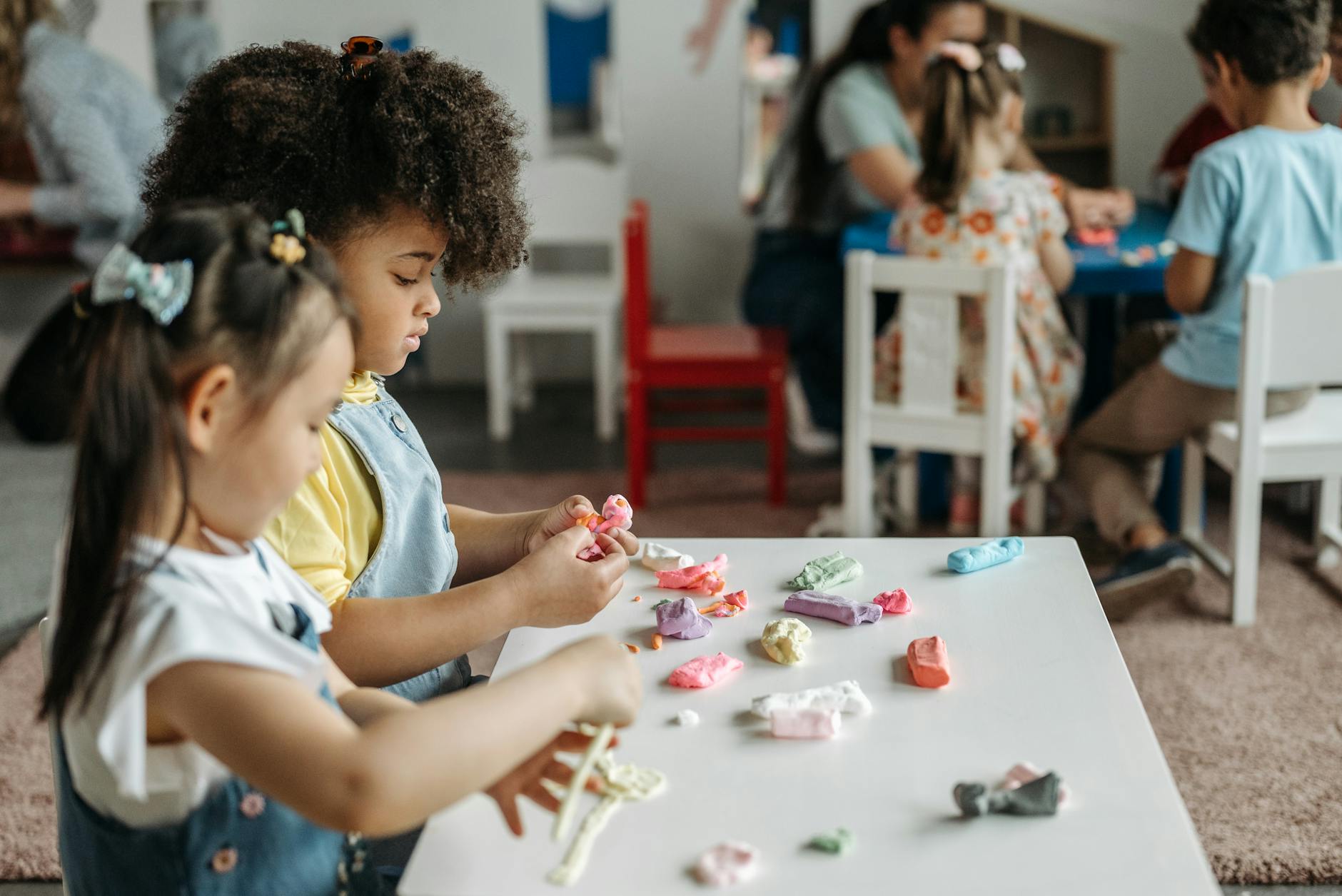
Somewhere in America right now, a child is pressing Play-Doh through a plastic mold, rolling it into a snake, or quietly eating a small piece of it despite being told not to. It's one of the most familiar sensory experiences of American childhood — that distinctive smell, that soft resistance, that particular shade of primary-color brightness.
What almost no one knows is that the compound in those little plastic tubs was originally designed to clean walls. And the reason it ended up in a toy store instead of a hardware store is a story about the death of an industry, a resourceful nursery school teacher, and a product that failed upward in the most unlikely way imaginable.
The Wallpaper Problem
To understand where Play-Doh came from, you have to understand what American homes looked like in the early 1950s — specifically, how they were heated.
Coal furnaces were still common in many parts of the country, and coal heat came with a persistent side effect: soot. The fine black residue would settle on walls, furniture, and wallpaper, leaving a grimy film that required regular cleaning. A Cincinnati-based company called Noah's Ark Wallpaper Company, run by Cleo McVicker and his wife, had developed a putty-like compound designed specifically for this task. The non-toxic, pliable material could be pressed against wallpaper, rolled off, and take the soot with it — a simple solution to a common household headache.
For a brief window of time, it sold reasonably well.
Then American homes changed.
The Industry That Disappeared
Throughout the 1950s, natural gas and electric heating systems rapidly replaced coal furnaces across the United States. It wasn't a gradual shift — it was a swift, nationwide transition driven by postwar infrastructure investment and the falling cost of alternative fuels. By the middle of the decade, coal heat was becoming a relic of an older America.
With it went the soot problem. And with the soot problem went the market for a wallpaper-cleaning putty.
The McVickers found themselves holding a manufacturing process, a product, and essentially no customers. The compound sat there — non-toxic, pliable, endlessly re-rollable — waiting for someone to figure out what else it could possibly be used for.
That someone was a nursery school teacher in Cincinnati named Kay Zufall.
The Classroom That Changed Everything
Kay Zufall was Joe McVicker's sister-in-law, and when she heard that the family's cleaning product was struggling, she paid close attention to what the compound actually was rather than what it had been designed to do.
She brought some into her nursery school classroom and handed it to her students in place of the standard modeling clay that schools typically used. The difference was immediately apparent. Traditional clay was stiff and difficult for small hands to manipulate. The McVicker compound was soft, responsive, and effortless to shape. The children loved it.
Zufall was convinced it could work as a children's craft material and pushed the idea hard within the family. Joe McVicker, still in his early twenties at the time, took the concept to a school supply company. The response was enthusiastic. In 1956, the compound was repackaged, given a new name — Play-Doh — and introduced to the American educational market.
Within a year, it had expanded into retail toy stores. Within a few years, it had become one of the best-selling children's products in the country.
Building a Brand Out of an Accident
The transformation from cleaning product to cultural icon didn't happen overnight, and it required some deliberate reinvention along the way. The original compound came in a single off-white color — functional, but not exactly exciting. Bright colors were added. New accessories followed: rollers, molds, extruders, playsets. Each addition made the product more visually appealing and more versatile, pulling it further from its industrial origins.
The scent, which is now one of the most recognizable smells in American childhood, was originally just a byproduct of the compound's ingredients — a combination of water, salt, and flour with a small amount of boric acid. Nobody designed that smell intentionally. It became iconic by accident, the way so much of Play-Doh's story did.
Hasbro acquired the brand in 1998, and the product has since sold well over three billion cans globally. It has been inducted into the National Toy Hall of Fame. The distinctive fragrance has even been trademarked — officially described by Hasbro as "a sweet, slightly musky, vanilla-like fragrance, with slight overtones of cherry, and the natural smell of a salted, wheat-based dough."
Not bad for a wall cleaner.
What the Story Actually Tells Us
The Play-Doh origin story gets told occasionally as a feel-good tale about creative thinking and second chances, and it is that. But it's also something more specific: a reminder that obsolescence can be a form of opportunity, if the timing is right and someone is paying close enough attention.
The McVicker compound didn't become Play-Doh because anyone planned it that way. It became Play-Doh because coal heating disappeared, because a nursery school teacher noticed that children responded to a particular texture, and because a young businessman was willing to pivot completely away from the product's original purpose.
Every child who has ever sat down with a tub of the stuff and pressed it into something unrecognizable is, in a small way, the beneficiary of an entire industry's collapse.
The hidden origin doesn't always look like inspiration. Sometimes it looks like a problem that quietly solved itself.