The Bird, the Editor, and the President: How Turkey Became America's National Meal
The Bird, the Editor, and the President: How Turkey Became America's National Meal
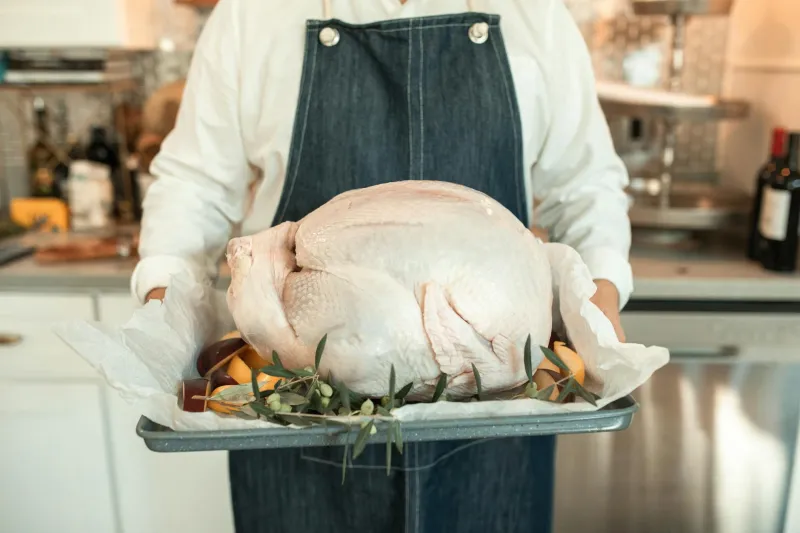
Every fourth Thursday of November, roughly 46 million turkeys are consumed across the United States. Families drive hours to sit together, arguments are had over football games, and the bird sits at the center of the table like it has always been there — like it was always meant to be there.
But it wasn't. The turkey's position as America's Thanksgiving centerpiece is not the result of ancient tradition or colonial custom. It is the result of one extraordinarily persistent woman, a president fighting to hold a country together, and a decades-long campaign to turn a fractured nation into something that felt unified — at least for one meal a year.
The Feast Before the Holiday
To understand how Turkey Day became Turkey Day, you have to separate two things that Americans tend to treat as the same: the act of giving thanks and the national holiday called Thanksgiving.
Colonists in early America held plenty of harvest celebrations. Some of them involved turkey. Many of them involved venison, fish, oysters, wildfowl, and whatever else was available. The 1621 gathering between the Wampanoag and the Plymouth colonists — the event most Americans learn about as the "first Thanksgiving" — almost certainly didn't feature turkey as a centerpiece. Edward Winslow's firsthand account mentions venison and "fowl," which historians generally interpret as duck or goose.
For the next two centuries, Thanksgiving was celebrated inconsistently. Some states observed it. Others didn't. The date shifted depending on who was in charge. There was no unified national holiday — just a loose collection of regional traditions that happened to share a general theme of gratitude.
That's where Sarah Josepha Hale comes in.
The Most Determined Editor in American History
Sarah Josepha Hale was the editor of Godey's Lady's Book, the most widely read magazine in America during the mid-1800s. She was also, by any reasonable measure, one of the most influential women of her era — and she had a mission.
Beginning in 1827, Hale began writing letters to presidents, governors, and senators arguing that the United States needed a unified national Thanksgiving holiday. Her reasoning was part cultural, part patriotic: a shared holiday, celebrated on the same day across every state and territory, would strengthen the bonds of a young and often fractious nation.
She wrote to Zachary Taylor. He ignored her. She wrote to Millard Fillmore, Franklin Pierce, and James Buchanan. None of them acted. For more than thirty years, her campaign produced almost nothing.
But she kept writing. And in 1863, she finally found a president who was ready to listen.
Lincoln's Strategic Gratitude
By the fall of 1863, the Civil War had been grinding on for more than two years. Gettysburg had just been fought. The nation was exhausted, divided, and desperate for something — anything — that might remind Americans on both sides of what they shared rather than what separated them.
Hale wrote to Abraham Lincoln in September of that year, making her case one more time. Lincoln's Secretary of State, William Seward, drafted a proclamation in response, and on October 3, 1863, Lincoln signed it. Thanksgiving was declared a national holiday, to be observed on the last Thursday of November.
The timing was not coincidental. Lincoln needed a narrative of unity. A shared national holiday — rooted in gratitude, family, and abundance — served that purpose directly. Thanksgiving wasn't just a meal. It was a political statement: that the United States was still one country, still capable of sitting down together.
As for what was actually eaten at these Thanksgiving tables in 1863 — turkey was one option among many. Ham, goose, duck, and oysters were all common. The turkey's dominance came later.
How the Turkey Won
The turkey's rise to centerpiece status was gradual, shaped by a combination of practicality and storytelling.
Practically speaking, turkeys made sense. Unlike chickens, which produced eggs, or cows, which produced milk, turkeys were primarily raised for meat. By late November, they were at their fattest. They were large enough to feed a family in a single sitting. And they were available across the country in a way that regional delicacies — oysters, for instance — were not.
But practicality alone doesn't explain how a food becomes a symbol. For that, you need storytelling. Throughout the late 19th century, magazine writers, cookbook authors, and illustrators began building the image of the Thanksgiving turkey as something almost mythological — the bird at the center of an idealized American family scene. Norman Rockwell's famous 1943 painting Freedom from Want cemented that image for the 20th century: a grandmother presenting a gleaming turkey to a table full of smiling faces.
By the time that painting appeared, the turkey hadn't just become a Thanksgiving tradition. It had become the tradition — the one non-negotiable element of a holiday meal that had, in reality, been invented and refined over the course of less than a century.
A Tradition Built on Purpose
There's something worth sitting with in the Thanksgiving story. Americans tend to treat their traditions as if they emerged organically from history — inevitable, timeless, beyond question. But Thanksgiving is a reminder that traditions are made by people, often deliberately, often for specific reasons.
Sarah Josepha Hale wanted a holiday that would hold a nation together. Abraham Lincoln agreed because he needed exactly that. Cookbook writers and illustrators built the imagery. Farmers and food suppliers shaped the menu. And over generations, the whole constructed thing became something that feels as natural as breathing.
The turkey on your table this November didn't get there by accident. It got there because someone, a long time ago, decided it should.