How a Doctor's Prescription Accidentally Became America's Most Sacred Work Ritual

How a Doctor's Prescription Accidentally Became America's Most Sacred Work Ritual
At some point today, millions of Americans will push back from their desks, wander toward a coffee machine, and take a few minutes that belong entirely to them. It's one of the most universal rituals in the American workplace — so familiar it barely registers as a ritual at all. It's just what you do at ten in the morning.
But the coffee break, in its modern form, didn't emerge from coffee culture, union negotiations, or some enlightened theory about human productivity. It came from a factory floor in the early twentieth century, a physician trying to keep workers conscious, and a wartime government program that accidentally turned a medical intervention into a national habit.
The Fatigue Problem Nobody Had a Name For
At the turn of the twentieth century, American industrial factories were running on a simple principle: maximum hours, minimum stops. Workers — many of them recent immigrants with few alternatives — put in ten, twelve, sometimes fourteen hours a day with little more than a lunch break to interrupt the grind.
The result was a fatigue problem that factory owners noticed but didn't fully understand. Accident rates climbed in the afternoon. Output dropped. Workers made mistakes that cost time and money. Management blamed laziness. The workers blamed the conditions. Neither was entirely wrong.
In the 1910s, a small number of industrial physicians — an emerging profession at the time — began pushing a different theory. The problem wasn't character or effort. It was physiology. The human body, they argued, simply wasn't designed to sustain focused manual labor for eight or ten hours without a break. What workers needed wasn't discipline. They needed rest intervals.
One of the earliest documented experiments came from the Bingham Stamping Company in Buffalo, New York, around 1902, where a factory physician introduced mandatory fifteen-minute rest periods during the shift. Output didn't fall. It went up. Accidents decreased. The data was compelling, but the idea spread slowly. Factory owners were deeply suspicious of anything that looked like giving workers free time.
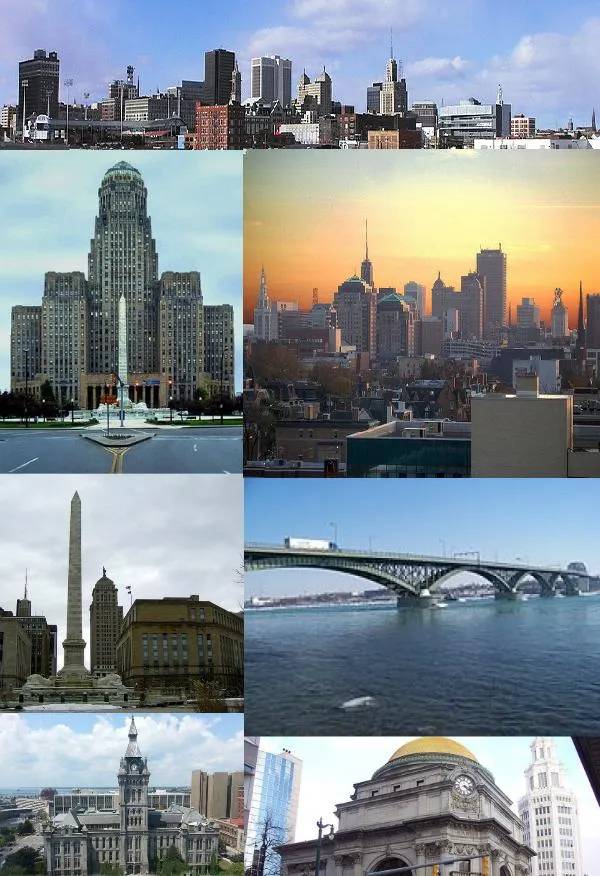 Photo: Buffalo, New York, via upload.wikimedia.org
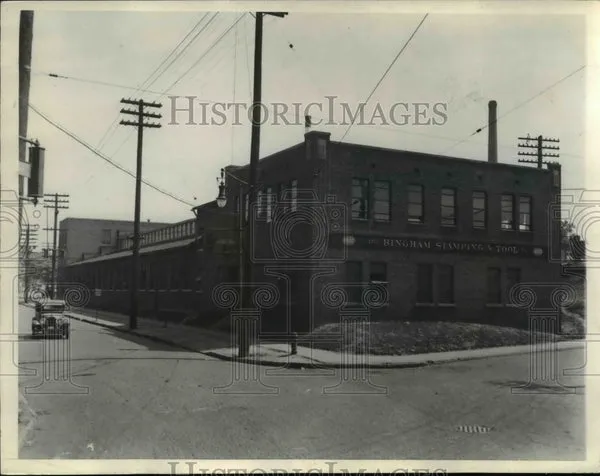 Photo: Bingham Stamping Company, via historicimages.com
Wartime Changes Everything
The real turning point came during World War II.
With millions of men overseas, American factories were running on a workforce that included large numbers of women, older workers, and people who'd never done industrial labor before. Production quotas were enormous — the war effort demanded it — and the government was deeply invested in keeping output high.
The War Production Board, working with industrial consultants and physicians, began systematically studying what kept workers productive over long shifts. Rest breaks kept coming up in the data. Plants that implemented structured rest periods — specifically, short breaks in the mid-morning and mid-afternoon — consistently outperformed those that didn't.
The government began encouraging factories to adopt the practice, and many did. Coffee, already a wartime staple, became the break's unofficial fuel. It was warm, cheap, fast to consume, and carried a mild stimulant effect that felt medically justifiable. Coffee carts began appearing on factory floors. The break and the beverage fused into a single ritual.
By the end of the war, the "coffee break" had a name and a constituency.
From Factory Floor to Office Tower
The postwar economic boom shifted millions of Americans from factory work to office work, but the coffee break made the transition with them. It had become culturally legible — a recognized pause, a shared moment, a small democratic pleasure built into the workday.
The Pan-American Coffee Bureau, a trade organization representing Latin American coffee producers, recognized an opportunity. In 1952, they launched an advertising campaign explicitly promoting the coffee break as a workplace institution. The campaign's tagline — "Give yourself a Coffee-Break" — was one of the first times the phrase appeared in print advertising, and it pushed the concept from common practice to something close to official American custom.
Unions picked it up too. By the mid-1950s, paid rest breaks were being written into collective bargaining agreements across industries. What had started as a physician's prescription had become a labor right.
The Industry It Built
It's difficult to overstate how much economic weight the coffee break eventually came to carry.
The American coffee industry — already substantial — grew dramatically through the second half of the twentieth century in direct relationship to the institutionalization of the work break. Workplace coffee services became their own sector. The office coffee machine became a fixture as standard as a photocopier.
Then, in 1971, a small coffee shop opened in Seattle. Starbucks, which would eventually build a global empire worth hundreds of billions of dollars, was in many ways a direct beneficiary of the cultural infrastructure the coffee break had built. By the time Starbucks began its major expansion in the late 1980s and 1990s, Americans had been trained for decades to expect a ritualized coffee pause in their day. Starbucks didn't create that expectation — it just monetized it at extraordinary scale.
Today, Americans spend an estimated $100 billion a year on coffee, and a significant portion of that spending happens in the windows carved out by the morning and afternoon break.
A Pause With a Long History
The next time you step away from your desk for a coffee, you're participating in something that stretches back more than a century — to a factory doctor in Buffalo who thought tired workers just needed a few minutes, to a wartime government trying to keep production lines moving, to a trade organization that saw a marketing opportunity in a workplace habit.
None of them set out to build one of America's most enduring cultural rituals. They were just trying to solve a problem.
It turned out the solution was a cup of coffee and fifteen minutes to breathe.