From Barn Floors to Backyard Glory: How Cornhole Quietly Conquered America
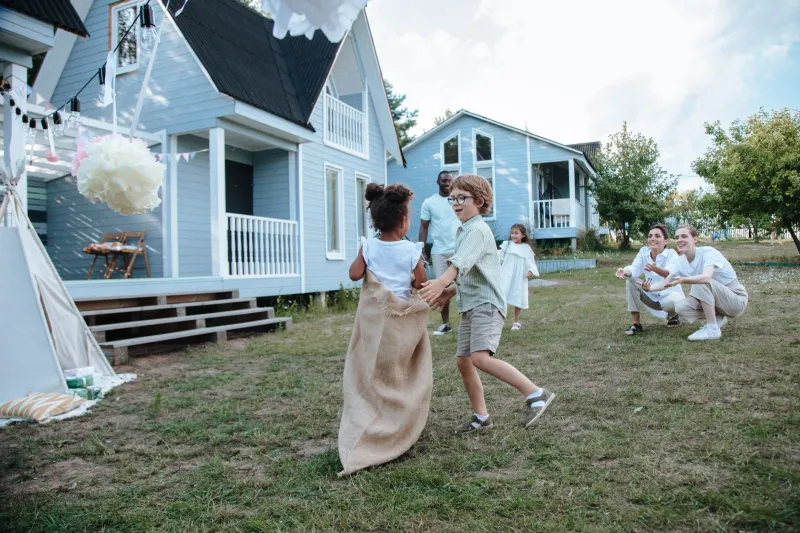
There is no grand inventor. No patent filing. No eureka moment preserved in a museum somewhere. Cornhole — the deceptively simple game of tossing beanbags at an angled board with a hole cut in it — arrived in American culture the way most folk traditions do: gradually, regionally, and without anyone paying much attention until suddenly everyone was playing it.
Today, cornhole sets are stacked in garages from Maine to Arizona. Organized leagues fill parking lots on Sunday afternoons. The American Cornhole League runs nationally televised tournaments. And yet, if you ask ten people where the game actually came from, you'll get ten different answers — and most of them will be wrong.
The Origin Stories Nobody Can Agree On
Like any good American folk tradition, cornhole comes wrapped in competing myths.
One popular version credits Native American tribes, particularly in the Great Plains region, with developing an early version of the game using dried animal bladders filled with rocks or seeds. The claim has circulated widely enough to feel credible, but historians have found no solid documentation to support it. It's the kind of origin story that sounds plausible precisely because it's vague.
A more persistent legend points to a 14th-century German cabinetmaker named Matthias Kuepermann, who supposedly crafted the first version of the game and brought it to the Midwest with German immigrant communities. That story has even less verifiable footing than the first one.
What historians and game researchers do agree on is this: by the late 19th and early 20th centuries, some version of a beanbag-tossing game was being played on farms across the Midwest — particularly in Ohio, Kentucky, and Indiana. Farmers, the story goes, used bags filled with dried corn kernels because that's what they had lying around. The boards were cut from leftover lumber. The hole was practical: it gave you something definitive to aim at. No chalk lines, no expensive equipment, no setup beyond what a barn already had.
It was a working-class game born from agricultural surplus and spare afternoon hours. Nothing more, nothing less.
The Long Quiet Years
For most of the 20th century, cornhole stayed stubbornly regional. It was the kind of game that showed up at church picnics in Cincinnati, at county fairs in rural Kentucky, and at family reunions where someone's grandfather dragged out a weathered set from the truck bed. Outside of the Midwest, most Americans had never heard of it.
That invisibility is part of what makes cornhole's eventual rise so surprising. It wasn't reinvented. Nobody rebranded it. No celebrity endorsed it. It simply waited.
The first formal nudge toward mainstream recognition came in the early 2000s, when the American Cornhole Association — later reorganized as the American Cornhole League — began standardizing rules and hosting organized competitions. Suddenly there were official board dimensions (48 inches by 24 inches, if you're curious), regulation hole sizes, and scoring systems. What had been a loose backyard pastime now had a rulebook.
But rules alone don't make a cultural phenomenon.
Tailgates, Suburbs, and the Great Outdoor Escape
Three forces conspired to push cornhole from regional curiosity to national obsession.
The first was tailgating culture. As NFL fandom expanded through the 1990s and 2000s, parking lots outside stadiums became their own social ecosystems. Tailgaters needed games that worked in tight spaces, required no electricity, and could be played by people holding a beer in one hand. Cornhole checked every box. It spread through tailgate culture the way a good recipe spreads — person to person, stadium to stadium, city to city.
The second force was suburban sprawl. As American backyards got bigger and outdoor entertaining became a genuine lifestyle category — complete with gas grills, string lights, and patio furniture sets — families needed something to do in those spaces. Cornhole was cheap, portable, and required zero athletic ability to enjoy. It was the rare game that a seven-year-old and a seventy-year-old could play together without either one feeling patronized.
The third and most dramatic force was the COVID-19 pandemic. When indoor gatherings became impossible in 2020, Americans flooded into their backyards, driveways, and parks with a desperation that was almost poetic. Cornhole set sales surged. Manufacturers reported months-long backorders. People who had never owned a set before suddenly needed one, and the game's built-in social distance — players stand roughly 27 feet apart — made it feel almost designed for the moment.
When a Backyard Game Got Serious
What's genuinely strange about cornhole's modern chapter is how seriously people have taken it.
The American Cornhole League now sanctions thousands of tournaments across the country. Top players have sponsors. There are professional circuits. ESPN has broadcast cornhole competitions in prime time — a fact that, depending on your perspective, either validates the sport or signals the end of civilization.
The ACL World Championships draws players from across the country competing for prize money that would have seemed absurd to the Ohio farmer who first nailed a hole into a wooden plank. Cornhole has achieved something rare: it made the leap from folk game to organized sport without losing the casual, accessible quality that made people love it in the first place.
You can play it competitively on a Saturday afternoon and then throw the boards in your truck and play it at a birthday party that same evening. That flexibility is its superpower.
The Hidden Thing About Cornhole
What cornhole's story really reveals is how American leisure works. The country doesn't always adopt the games that are most sophisticated or most exciting. It adopts the ones that fit the actual shape of its social life — the parking lots, the patios, the family gatherings where nobody can agree on what to do.
Cornhole fit that shape perfectly. It always did. It just took the rest of the country a century to notice.
Somewhere in a Midwestern barn, probably around 1890, someone tossed a corn-filled bag at a wooden board and got it in the hole. Nobody wrote it down. Nobody thought it mattered.
They had no idea what they'd started.