The Student's Purple Mistake That Revolutionized Medicine Forever
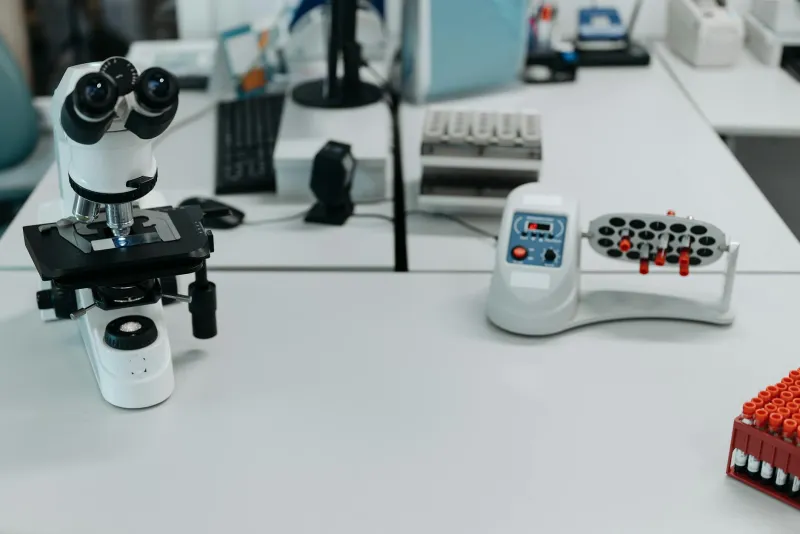
The Stain That Started Everything
In 1882, twenty-eight-year-old Paul Ehrlich hunched over his microscope in a cramped Berlin laboratory, frustrated beyond belief. The medical student was supposed to be studying for his exams, but he'd become obsessed with a seemingly impossible problem: how to see bacteria clearly under a microscope.
 Photo: Paul Ehrlich, via goldlabfoundation.org
Bacteria were nearly transparent, making them almost impossible to distinguish from the tissue around them. Ehrlich had been experimenting with textile dyes—the same chemicals used to color fabric—hoping to stain bacterial cells so they'd stand out. Most of his attempts failed miserably, producing muddy, indistinguishable blobs.
Then came the purple accident that changed everything.
When a Failed Fabric Dye Revealed a Medical Secret
Ehrlich had been working with methylene blue, a synthetic dye typically used to color cotton. When he applied it to a tissue sample crawling with malaria parasites, something extraordinary happened. The dye didn't just randomly color everything—it specifically attached to the parasites while leaving healthy human cells completely untouched.
This wasn't supposed to happen. Dyes were meant to color indiscriminately, like paint on a wall. But somehow, this particular chemical was acting like a guided missile, seeking out only the invaders.
Ehrlich stared at his microscope slide, watching the malaria parasites glow bright blue against the clear background of human tissue. In that moment, he realized he wasn't just looking at a better way to see bacteria—he was witnessing the birth of an entirely new approach to medicine.
The Magic Bullet Theory Changes Everything
Ehrlich's accidental discovery led him to a revolutionary idea he called "Zauberkugel"—the magic bullet. If a dye could selectively target specific cells, why couldn't a medicine do the same thing? Instead of flooding the entire body with toxic treatments that killed healthy tissue along with disease, what if doctors could create drugs that hunted down only the bad guys?
The concept was radical. Traditional medicine in the 1880s relied on brutal, broad-spectrum treatments. Doctors would purge patients with mercury, bleed them with leeches, or dose them with arsenic—hoping to kill the disease before killing the patient. Ehrlich's magic bullet theory suggested a completely different approach: precision warfare at the cellular level.
Spending the next three decades developing this idea, Ehrlich systematically tested hundreds of chemical compounds, looking for ones that could seek and destroy specific diseases. His laboratory became a pharmaceutical assembly line, churning out experimental treatments that could target syphilis, sleeping sickness, and other deadly infections.
From Textile Lab to Modern Medicine
Ehrlich's breakthrough didn't happen in isolation. The same German chemical industry that had revolutionized textile dyeing was perfectly positioned to mass-produce his experimental medicines. Companies like Bayer and Hoechst, originally founded to make synthetic dyes for clothing, suddenly found themselves at the forefront of pharmaceutical development.
This wasn't coincidence—it was chemistry. The molecular structures that made dyes stick to specific fibers turned out to be remarkably similar to the structures that made medicines stick to specific cells. The same precision engineering that could turn white cotton into brilliant red fabric could turn a harmless chemical into a disease-seeking missile.
By 1910, Ehrlich had developed Salvarsan, the first effective treatment for syphilis. More importantly, he'd proven that his magic bullet theory actually worked. Doctors could cure diseases without destroying their patients in the process.
The Accidental Foundation of Everything
Ehrlich's purple stain experiment became the conceptual foundation for virtually every modern medicine. Antibiotics work by targeting bacterial cell walls that human cells don't have. Chemotherapy drugs attack rapidly dividing cancer cells while largely sparing normal tissue. Even common painkillers like aspirin work by blocking specific enzymes involved in inflammation.
Every time you take a prescription medication, you're benefiting from Ehrlich's accidental discovery. That failed textile dye experiment established the basic principle that still guides pharmaceutical research today: the best medicines are precise weapons, not blunt instruments.
Why This Purple Mistake Still Matters
Today's pharmaceutical industry—worth over $1.4 trillion globally—traces its intellectual DNA directly back to Ehrlich's purple-stained microscope slide. His magic bullet theory didn't just create modern medicine; it created the entire concept of rational drug design.
Before Ehrlich, medicine was largely based on trial, error, and hope. After his accidental discovery, it became a science of molecular precision. The student who just wanted to see bacteria more clearly ended up giving humanity the tools to fight nearly every disease imaginable.
All because a textile dye refused to color everything the same shade of purple.