She Knew Every Number in Town: The Switchboard Operator Who Held America Together
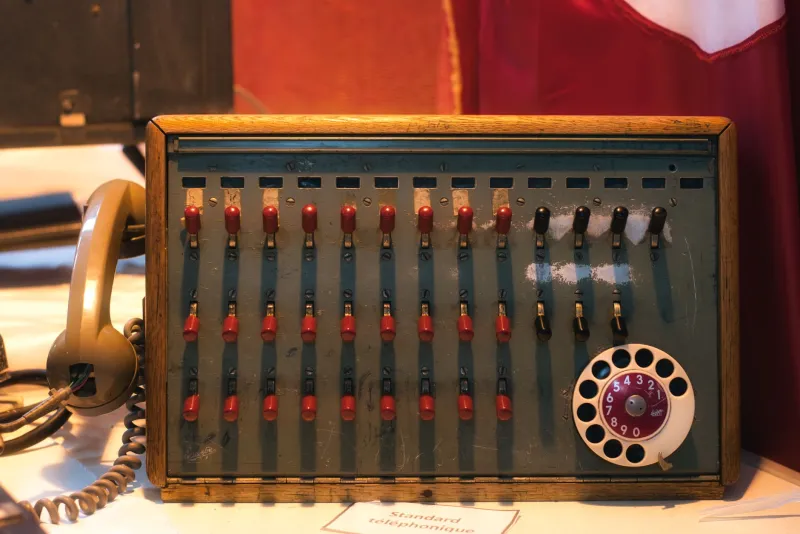
Imagine you live in a small town in rural Ohio in 1922. Your neighbor's barn is on fire. You don't have a way to reach the fire department directly — the number isn't posted anywhere obvious, and you've never had to call it before. So you do what everyone does.
You pick up the phone and say: "Central, get me the fire department."
And Central — the telephone operator at the local exchange — already knows which number to connect you to. She probably also knows that the Hendersons on Maple Street have a barn and that their son works volunteer fire duty on Tuesdays. She connects you in seconds, and sometimes she's already alerting the station before you finish your sentence, because she heard the urgency in your voice before you explained it.
This wasn't exceptional service. This was Tuesday.
The System Nobody Designed
When Alexander Graham Bell's telephone began spreading across the United States in the late 1870s and 1880s, nobody had a clear plan for how it would actually work at scale. The technology was real, but the infrastructure was improvised. Early telephone exchanges hired boys to operate the switchboards — a decision that lasted approximately five minutes before it became obvious that teenage boys were spectacularly bad at the job. They were rude to customers, slow to connect calls, and prone to pranking one another on the lines.
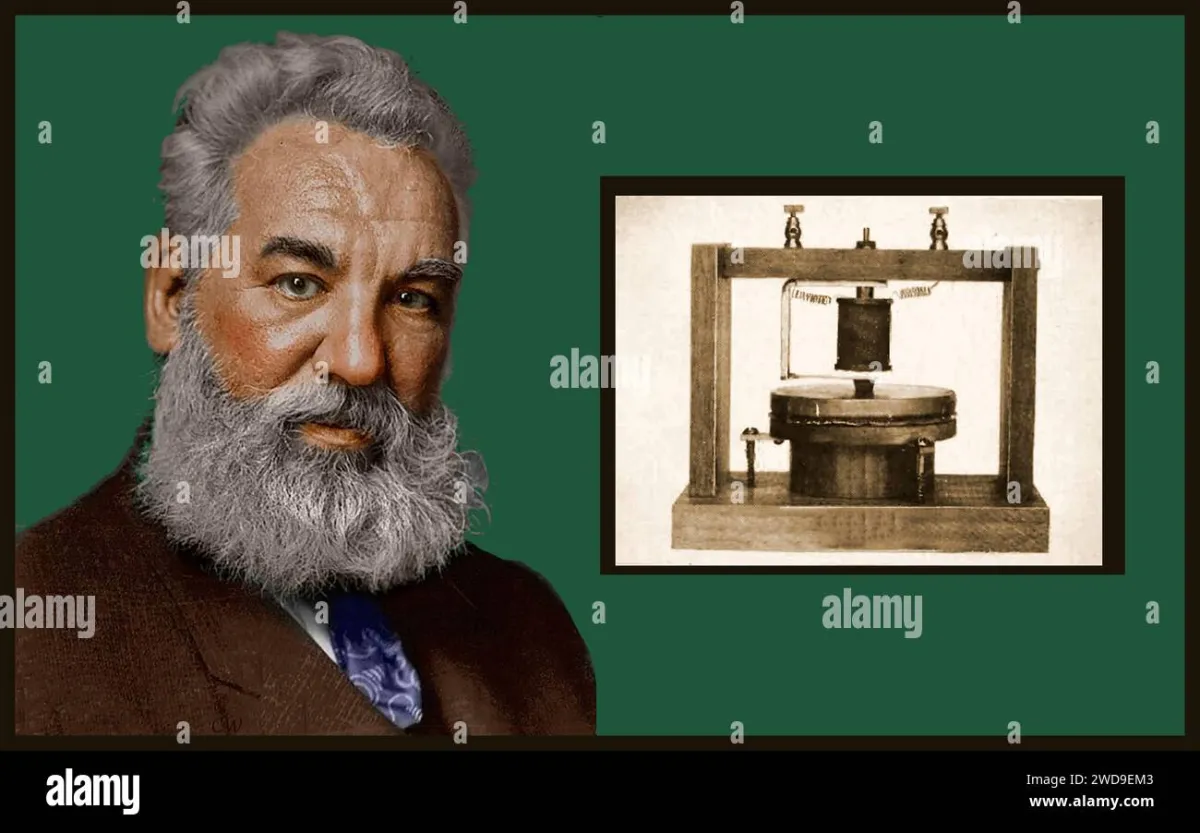 Photo: Alexander Graham Bell, via c8.alamy.com
By the mid-1880s, telephone companies had largely replaced them with young women. The reasons the companies gave were practical: women were perceived as more patient, more polite, and more reliable under pressure. What nobody fully anticipated was that hiring women who lived in the communities they served would transform the telephone exchange into something far more powerful than a call-routing station.
These operators knew their towns. They knew who was sick, who had just had a baby, which families were feuding, and which farmer was likely to be in his field rather than his house at 2 in the afternoon. That knowledge wasn't a side effect of the job. It became the job.
Central Knows
In small-town America, the phrase "ask Central" carried genuine weight. Operators were routinely asked questions that had nothing to do with placing a call.
What time does the hardware store close? Central knows. Is the road out past Miller Creek flooded? Central's been fielding calls about it all morning. Has anyone heard from Dr. Patterson? Central connected him to the Whitfield place about an hour ago — try there.
This wasn't a formal service that telephone companies advertised. It emerged organically, because the operators were available, knowledgeable, and — crucially — trusted. In communities where everyone knew everyone, the operator was the person who knew everyone's everyone.
During emergencies, this role became critical. Operators warned communities about approaching storms before weather services could broadcast alerts. They coordinated responses to accidents, fires, and medical crises. In at least a handful of documented cases, operators who noticed that an elderly subscriber hadn't placed their usual morning call sent someone to check on them — and found a person in need of help.
None of this was in anyone's job description. It was just what the work became when you put a capable, community-embedded person at the center of an information network.
The Human Algorithm
What's fascinating about early telephone operators, viewed from a modern distance, is how much they functioned like the algorithms we now rely on — but with judgment, empathy, and local context that no algorithm has ever managed to replicate.
They triaged information. They prioritized connections. They filtered out noise and surfaced what mattered. When a call came in that seemed routine but sounded wrong — a voice too strained, a request too vague — an experienced operator might stay on the line, ask a clarifying question, or quietly alert someone else in the exchange.
This was pattern recognition built from years of listening. It was community intelligence accumulated through thousands of small interactions. And it worked in a way that the telephone companies themselves hadn't engineered and couldn't have engineered, because it depended entirely on the human being sitting at the board.
The Long Goodbye
Automated switching technology began arriving in American telephone exchanges in the 1920s, and the transition accelerated dramatically after World War II. Dial phones — which allowed callers to connect directly without going through an operator — spread through suburban and rural America through the 1950s and 1960s.
The efficiency gains were real. Automated systems could handle more calls, more reliably, at lower cost. Nobody seriously argued against modernization.
But something did disappear. The woman at the exchange who knew that the Hendersons' barn was near the creek and that old Mr. Calloway's hearing was going so you had to speak up — she was gone. In her place was a dial tone and a phone book.
The information was still out there, distributed across the community. It just had no center anymore.
The Same Need, Different Technology
Here's what's worth noticing: the thing those operators provided didn't go away when they did. The need for a community nerve center — a place where local knowledge pooled, where emergencies got flagged, where someone knew what was happening on your street — that need is as alive today as it was in 1922.
We've just rebuilt it with different tools.
Next-door neighbor apps. Local Facebook groups. Community subreddits. Text chains that spiral through a neighborhood when a coyote is spotted or a car window gets smashed. The format is different, the technology is unrecognizable, but the function is identical. People still want to ask "has anyone heard anything about the road past Miller Creek?" and get an answer from someone who actually knows.
The operators didn't create that need. They just served it, brilliantly, for a few decades in the middle of the last century. And when the technology moved on and left them behind, the need went looking for a new home.
It found one. It always does.
The Hidden Origin
The telephone is usually remembered as Alexander Graham Bell's invention, and the infrastructure behind it as an engineering story — cables and exchanges and switching stations. But the way the telephone actually functioned in American communities, especially rural ones, was shaped as much by the women who ran the switchboards as by any piece of hardware.
They improvised a community service that nobody asked for and everyone came to rely on. They turned a communication technology into a social institution. And they did it quietly, professionally, and without anyone thinking to write it down until most of them were gone.
The next time you post a question in your neighborhood Facebook group and get seventeen answers in four minutes, you're participating in something that's older than the internet by about a hundred years.
Central figured it out first.