The Soggy Sock That Launched a Million Backyard Battles

Every summer, somewhere across America, a kid fills a thin rubber balloon with water from a garden hose, ties it off, and hurls it at an unsuspecting sibling. The impact is brief, the soaking is total, and the chaos that follows is completely joyful. It's one of those rituals so deeply baked into American summer that most people never stop to wonder where it actually came from.
The answer involves a British inventor, a waterproofing problem, and one of the great accidental pivots in the history of children's toys.
A Sock Problem, Not a Toy Problem
In 1950, a British inventor named Edgar Ellington was working on a very unglamorous challenge: how to keep soldiers' feet dry. Trench foot — a painful condition caused by prolonged exposure to wet conditions — had plagued military personnel for decades, and Ellington believed the solution was a waterproof sock made from latex rubber.
He crafted a prototype by stretching a thin latex membrane over a standard sock form and then filling it with water to test whether it would hold a seal. It held, briefly — and then it didn't. The latex popped, soaking Ellington and, by most accounts, irritating him considerably.
But here's where the story turns. Rather than tossing the failed prototype aside, Ellington noticed something unexpected. The burst was fast, satisfying, and oddly fun. The little balloon had done something no useful waterproof sock ever would: it made him laugh.
Ellington reportedly described the moment in his notes as the point where he realized he'd invented "a cheerful little bomb." He wasn't wrong.
From Failed Prototype to Novelty Item
Ellington never cracked the waterproof sock problem, but he did start producing small latex balloons designed to be filled with water. He marketed them in Britain initially as a novelty — something between a prank device and a party trick. The reception was mixed. British sensibilities in the early 1950s weren't entirely prepared for a toy whose entire purpose was to make someone wet.
But the concept crossed the Atlantic quickly, and in the United States it found a very different audience.
American toy companies in the postwar boom years were hungry for cheap, repeatable, seasonal products. A toy that cost almost nothing to produce, required zero batteries, broke on impact (meaning you needed more of them), and could be sold in bags of fifty? That was practically a business model in balloon form.
By the mid-1950s, water balloons were being packaged and sold under names like "Water Bombs" in dime stores and five-and-tens across the country. They were cheap enough that a dollar could buy an afternoon's worth of ammunition, and they needed nothing more than a backyard hose to operate.
Why America Adopted Them So Completely
The timing was almost perfect. Postwar suburban America had produced exactly the right conditions for a water balloon culture to flourish. Families were moving to homes with yards. Kids were spending summers outside, largely unsupervised, in neighborhoods full of other kids. The baby boom had created a massive population of children with long summer days and a biological need to do something chaotic with them.
Water balloons fit that world like they'd been designed for it — which, technically, they hadn't been.
There was also something democratically satisfying about them. You didn't need to be athletic. You didn't need equipment. You didn't need teams, rules, or a referee. You just needed a balloon, a faucet, and someone who wasn't paying attention. The playing field was refreshingly level.
By the 1960s, water balloon fights had become a genuine American summer institution — referenced in TV shows, neighborhood folklore, and eventually, the kind of nostalgic shorthand that signals "carefree childhood" in a movie montage.
The Engineering Problem Nobody Solved for Sixty Years
For all their popularity, water balloons had one persistent flaw: they were a pain to fill. Stretching a small balloon over a faucet, coaxing the water in without the whole thing exploding in your hand, tying it off without losing half the water — it was a process that tested patience in direct proportion to how excited you were to use the thing.
For decades, this was simply accepted as part of the ritual. The frustration was almost ceremonial.
It wasn't until 2015 that a product called Bunch O Balloons appeared on the market, allowing users to fill and tie over a hundred water balloons in under a minute using a single hose attachment. The invention went viral, became one of the fastest-selling toy products in recent memory, and triggered a minor legal war over the patent.
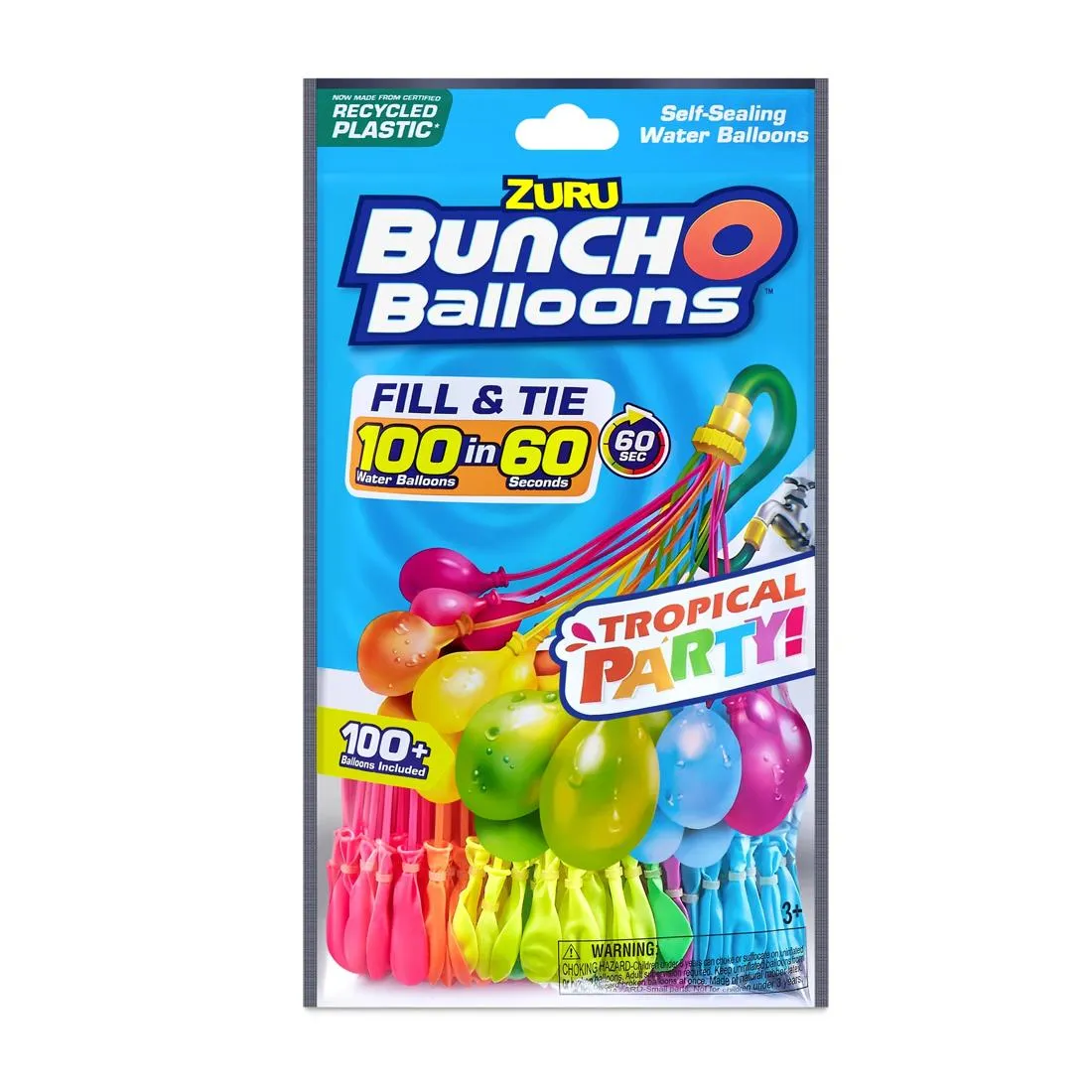 Photo: Bunch O Balloons, via assets.target.com.au
The fact that a sixty-year-old toy generated that kind of excitement — and that kind of legal drama — says something about just how embedded water balloons had become in the American summer imagination.
What a Failed Sock Left Behind
Edgar Ellington never got rich from water balloons. He didn't patent the idea in a way that followed it across the Atlantic, and the American toy industry that profited most from his accidental invention did so largely without him in the picture.
But his soggy failure in a British workshop set something in motion that millions of Americans have reenacted every summer for more than seventy years. A latex membrane, a garden hose, a backyard, and someone who absolutely didn't see it coming.
Not bad for a sock that didn't work.