Four Hungry Wives and a Clever Waiter: The Accidental Invention That Became America's Favorite Bar Food
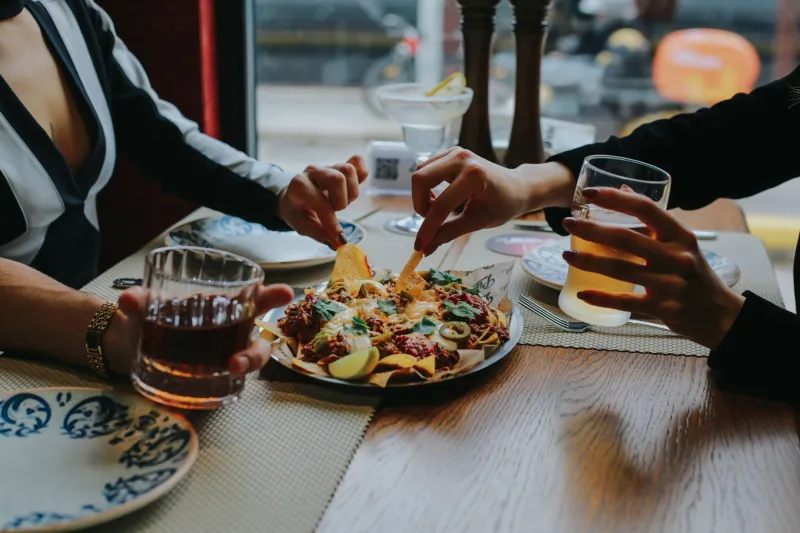
Picture the scene: it's 1943, the restaurant is closed, the kitchen is nearly bare, and four American women just walked through the door asking for something to eat. Most people in that situation would apologize and point them toward the nearest diner. Ignacio "Nacho" Anaya did something different. He looked at what he had, improvised, and accidentally created one of the most replicated dishes in American food history.
Today, nachos are a $7 billion industry. They're in sports arenas, airport terminals, backyard cookouts, and Michelin-starred restaurants doing "elevated" versions with wagyu beef and truffle oil. But none of that would exist without one quick-thinking maître d' working with tortilla scraps, melted cheese, and a few jalapeños in a small kitchen in Piedras Negras, Mexico.
The Night It All Started
Ignacio Anaya worked at the Victory Club restaurant in Piedras Negras, a border town just across the Rio Grande from Eagle Pass, Texas. On that particular evening in 1943, the head chef had already gone home. A group of wives from a nearby U.S. military base wandered in late, hungry, and looking for a snack.
Anaya wasn't a trained chef. But he was resourceful. He found some leftover tortillas in the kitchen, cut them into triangles, and fried them. Then he grabbed whatever toppings were within reach — shredded cheese and pickled jalapeño slices — and slid the whole thing under the broiler. When the cheese bubbled and browned, he carried the improvised plate out to the table.
The women loved it. They asked what it was called. Anaya, thinking on his feet, named it after himself. "Nacho's especiales" — Nacho's Special. The nickname stuck, the "especiales" eventually fell away, and the dish quietly crossed the border into American kitchens and bars.
From Border Town to Ballpark
For the better part of two decades, nachos stayed close to their origin. They were a regional curiosity, popular in Texas border towns but largely unknown to the broader American public. That changed in 1976, thanks to a man named Frank Liberto and a Texas Rangers baseball game.
Liberto, a food entrepreneur, figured out how to make a shelf-stable processed cheese sauce that could be kept warm and poured directly over chips without any broiling required. It wasn't gourmet. It wasn't subtle. But it was fast, cheap, and completely scalable. He introduced the product at Arlington Stadium, and the reaction was immediate. Fans went wild.
The concession-stand nacho — chips in a paper tray, fluorescent orange cheese sauce poured from a pump dispenser — became an American institution almost overnight. By the 1980s, you couldn't walk through a sports venue in this country without seeing them. Howard Cosell famously mentioned nachos during a Monday Night Football broadcast in 1978, effectively giving the dish its national television debut and sealing its cultural status.
Why the Combination Works So Well
There's a reason nachos spread so fast once Americans got a taste. The dish hits almost every sensory note at once. The crunch of the chip. The salt. The fat from the cheese. The heat from the jalapeño. Food scientists call this "complex flavor stacking" — when multiple strong flavors reinforce each other rather than competing. Nachos do this almost perfectly, and they do it with ingredients that were already cheap and widely available in the United States.
The tortilla chip itself had been around since at least the 1940s, produced in Los Angeles by entrepreneurs who were finding creative uses for leftover tortillas from local factories. Cheese was a pantry staple. Jalapeños were increasingly available as Mexican-American communities grew across the Southwest. Anaya didn't invent any of the individual components. He just put them together in a way that nobody had thought to do before.
That's often how the most durable food inventions work — not through elaborate culinary design, but through practical improvisation with whatever's on hand.
The Dish That Refuses to Stay Simple
Once nachos entered the American mainstream, they became a canvas. Ground beef, black beans, sour cream, guacamole, pico de gallo, pulled pork, brisket — over the decades, toppings multiplied until the original three-ingredient plate was barely recognizable. Tex-Mex restaurants built entire menu sections around nacho variations. Super Bowl party culture made them a ritual. College bars discovered they were one of the easiest high-margin items to sell alongside a pitcher of beer.
And then, somewhat inevitably, fine dining got involved. Chefs began deconstructing nachos, sourcing artisanal chips, and layering them with ingredients that would have baffled Ignacio Anaya entirely. The dish had traveled so far from its origin that it had become its own genre.
What Nacho Anaya Never Got
For all the wealth his invention generated, Ignacio Anaya saw very little of it. He never trademarked the dish or pursued any formal claim to the concept. He spent his life working in restaurants near the border, occasionally acknowledged as the creator of something enormous but never compensated for it. He died in 1975, just one year before Frank Liberto's stadium version turned nachos into a national phenomenon.
Piedras Negras does hold an annual International Nacho Festival each October, and a plaque marks the spot where the Victory Club once stood. It's a modest tribute to an invention that generates billions of dollars a year and feeds millions of Americans every weekend.
The next time you reach into a basket of chips at a bar, or pile toppings onto a sheet pan on game day, you're participating in something that started with a closed kitchen, four unexpected guests, and one man who decided that running out of options was no reason to turn anyone away hungry.
Some of the best things in American food culture started exactly that way.