Lost, Embarrassed, and Stuck in the Mud: The Navigation Disaster That Gave America the Open Road
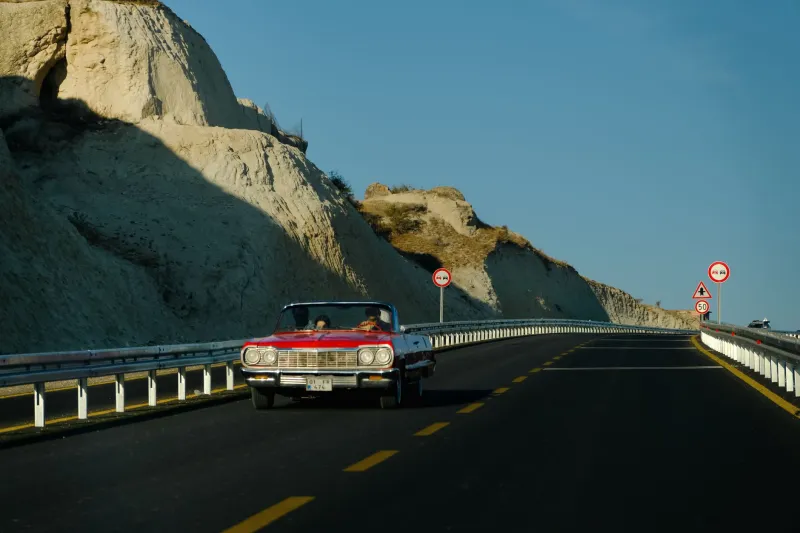
Every summer, millions of Americans pack their cars with more luggage than strictly necessary, argue briefly about which route to take, and then pull out of the driveway with the loose, optimistic energy of people who have decided that the destination is almost beside the point. The road trip — that particular American ritual of motion for its own sake — feels like it has always existed. It feels native, instinctive, built into the national character like a preference for wide spaces and self-determination.
It wasn't always that way. And the story of how it got that way starts with a group of motoring enthusiasts who got completely, mortifyingly lost.
America's Roads in the Early 1900s: A Generous Description
At the dawn of the twentieth century, the American automobile was a machine in search of a surface to drive on. Cars existed. Roads, in any meaningful sense, largely did not.
What existed instead was a patchwork of dirt tracks, farm paths, and occasionally graded gravel stretches that connected towns in ways that made sense to horses and made very little sense to internal combustion engines. There was no national system. There were no numbers. There were no standards. In wet weather, the best roads in the country turned to mud so deep that vehicles sank to their axles and stayed there.
Navigation was conducted by word of mouth, hand-drawn maps sold by local merchants, and a system of painted blazes on telephone poles and fence posts maintained by a chaotic collection of private "trail associations" — booster organizations that marked their own preferred routes and argued bitterly with rival associations about whose route was better. The Lincoln Highway had its boosters. The National Old Trails Road had its own. The Dixie Highway had yet another. None of them agreed. None of them were numbered. And none of them were particularly accurate.
Into this navigational wilderness, in the summer of 1925, drove the men who would accidentally fix everything.
The Embarrassing Drive That Changed History
The American Association of State Highway Officials had organized a promotional driving tour to demonstrate the viability of long-distance automobile travel. The idea was straightforward: a convoy of cars would drive a planned route across the country, proving to a skeptical public and an indifferent federal government that interstate road travel was both possible and desirable.
The convoy got lost. Repeatedly. The trail markers were contradictory. The maps were wrong. The roads that were supposed to exist did not exist, and the roads that did exist went to places nobody wanted to go. The convoy made wrong turns, backtracked, sat in mud, and arrived at various checkpoints hours or days behind schedule.
The organizers were embarrassed. But in their embarrassment, they did something practical: they sat down and drew a better map. Not a promotional illustration, not a booster pamphlet — an actual functional map, with routes assigned consistent numbers, with standards for signage, with a logic that a driver who had never seen the road before could actually follow.
That working document, refined and formalized over the following year, became the foundation of the U.S. Numbered Highway System, officially adopted in 1926.
The Tire Company That Wanted You on the Road
The federal government didn't invent the American road trip. Washington, for most of the early twentieth century, wanted as little to do with roads as possible, viewing them as a state and local matter that the federal treasury had no business funding. The push came from somewhere else entirely.
Goodrich, Goodyear, and Firestone — the tire companies — understood something that the government didn't yet: a nation of drivers was a nation of tire buyers. Every mile of improved road was a potential sale. Every family that discovered the pleasure of long-distance driving was a customer for life.
These companies funded road advocacy organizations, lobbied state legislatures, and — most effectively — published their own road maps and distributed them for free at gas stations. For much of the 1920s and 1930s, the most accurate and widely used road maps in America were produced not by any government agency but by oil and tire companies that had a direct financial interest in getting Americans comfortable behind the wheel and pointed toward the horizon.
The numbered highway system gave those maps a common language. Once a route had a number — U.S. Route 66, U.S. Route 1, U.S. Route 40 — it could be referenced, remembered, and romanticized. Numbers turned roads into destinations.
 Photo: U.S. Route 66, via thumbs.dreamstime.com
Route 66 and the Mythology of Going
No single road did more to transform the American highway from a practical infrastructure into a cultural symbol than U.S. Route 66. Commissioned in 1926 as part of the original numbered system, it ran from Chicago to Santa Monica, cutting diagonally across the middle of the country through small towns, desert stretches, and mountain passes that most Americans had never seen.
 Photo: Santa Monica, via parade.com
During the Dust Bowl migrations of the 1930s, Route 66 became the road that desperate families drove west in search of something better. John Steinbeck called it "the Mother Road" in The Grapes of Wrath, and the name stuck. After World War II, returning veterans with cars and a hunger for movement discovered it again — not as a road of necessity but as a road of possibility. Diners, motor courts, roadside attractions, and neon signs accumulated along its length like beads on a string.
By the 1950s, the road trip had become a distinctly American form of recreation: the idea that packing a car and driving somewhere — anywhere — was itself the point. The destination was secondary to the motion.
The Wrong Turn You're Still Taking
The Interstate Highway System, launched in 1956 under President Eisenhower, eventually bypassed much of the old numbered highway network, and Route 66 was officially decommissioned in 1985. But the culture it had built didn't disappear. It just moved.
Americans still get in their cars and drive for the sake of driving. They still choose scenic routes over fast ones. They still stop at roadside diners in towns they've never heard of and feel, briefly, like they've discovered something. The ritual persists because it was never really about the road. It was about the feeling that motion creates — the sense that somewhere past the next bend, something unexpected is waiting.
That feeling has a surprisingly unglamorous origin: a convoy of embarrassed motorists, stuck in the mud, sketching a better map because the one they had was useless.
Somehow, that seems exactly right.