Out of Plain Paper and Into History: The Department Store Scramble That Made Gift Wrapping an American Obsession
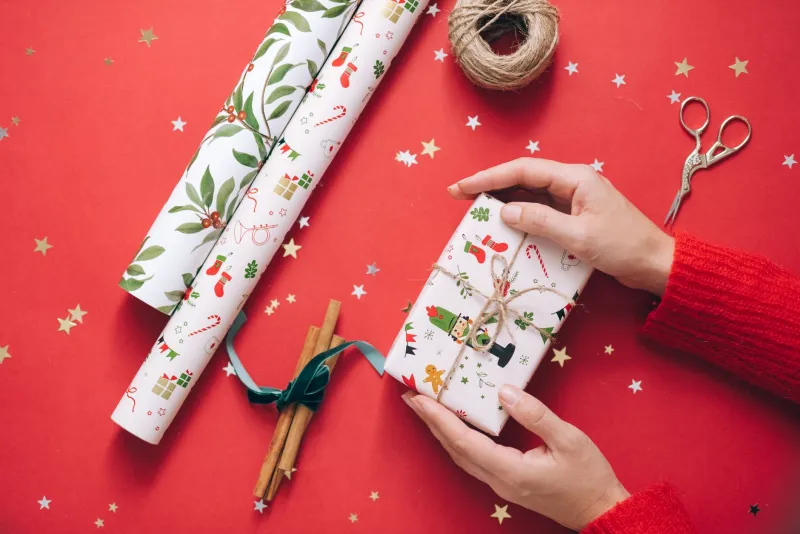
Every December, Americans spend billions of dollars on paper they fully intend to tear apart and throw away. Rolls of it. Sheets of it. Coordinated patterns, ribbons, bows, and enough tape to wrap a small car. And yet almost nobody stops to wonder: who decided this was a thing we do?
The answer starts in a department store, a supply shortage, and a decision made in about thirty seconds.
Before the Wrapping, There Was the Hiding
For most of American history, gifts weren't wrapped the way we know it today. They were concealed — tucked under blankets, hidden in boxes, slipped inside plain brown paper or simple white tissue. The goal was to obscure the gift, not to dress it up. Presentation wasn't really part of the conversation.
Wealthy households sometimes tied ribbons around packages or layered gifts in tissue paper to add a sense of occasion, but this was a minor flourish, not a cultural expectation. For most families, getting the gift was the point. What it arrived in barely registered.
That started to change in the late nineteenth century as department stores transformed Christmas shopping into a theatrical experience. Stores competed for attention with elaborate window displays, seasonal decorations, and the growing ritual of gift-giving as a commercial event. But even then, the packaging itself remained an afterthought.
The Hallmark Moment Nobody Planned
In 1917, a Kansas City store run by brothers Rollie and Joyce Hall — the same Halls who would eventually build Hallmark into a greeting card empire — found itself in a familiar retail nightmare: the holiday rush had wiped out their stock of plain tissue paper, and customers still needed something to wrap their gifts in.
Facing empty shelves and a line of shoppers, someone behind the counter made a quick decision. The store had decorative envelope liners in stock — fancy printed paper designed to sit inside greeting card envelopes, adding a touch of color when a card was opened. It was thin, it was patterned, and it was available.
They put it out for sale at ten cents a sheet.
It sold out almost immediately.
The following year, they ordered it again on purpose. Same result. By 1919, the Hall brothers had begun printing their own decorated paper specifically designed for wrapping gifts, and what had been a stopgap measure became a product category.
From Stopgap to Status Symbol
What happened next is the part that reveals something interesting about American consumer culture. Once decorative wrapping paper existed as a purchasable item, it stopped being a convenience and started becoming an expectation.
Department stores began offering gift-wrapping services. Magazines ran tips on how to tie bows and fold corners cleanly. By the 1930s, the visual presentation of a gift had become part of its meaning. A beautifully wrapped box communicated care, effort, and occasion in a way that a plain brown package simply couldn't.
This shift wasn't accidental in the psychological sense, even if it was accidental in its origins. Wrapping a gift adds a layer of anticipation. It creates a moment — the tearing of paper, the reveal — that a gift handed over in a bag or a box simply doesn't deliver in the same way. Marketers understood this quickly, and the packaging industry leaned in hard.
By the mid-twentieth century, the gift-wrapping industry had become a significant commercial force. Paper mills, ribbon manufacturers, bow companies, and specialty printers all built businesses around a ritual that had existed for barely three decades.
The Ritual Becomes the Point
Something fascinating happened as the twentieth century progressed: the wrapping began to carry as much symbolic weight as the gift itself. Children learned to shake boxes, feel for edges, and read the shape of a package like a puzzle. The unwrapping became a performance, something families watched together. The pile of torn paper under the tree became its own kind of evidence — proof of abundance, of generosity, of a good Christmas morning.
This is where the accidental nature of the origin becomes most striking. Nobody engineered this emotional dimension. Nobody at the Hall brothers' store in 1917 thought, let's create a ritual that will define American holidays for the next century. They just needed to sell something to wrap gifts in before the store closed.
And yet here we are, a hundred-plus years later, with an entire aisle at every big-box store dedicated to paper, tape, ribbons, gift tags, and tissue paper stuffed into bags — a multi-billion dollar industry built on a substitute product that nobody originally wanted.
Why It Still Matters
The staying power of gift wrapping in American culture says something worth paying attention to. In an era of Amazon boxes and digital gift cards, the wrapped present has held on with surprising stubbornness. People still drive to stores specifically to buy paper. They still spend twenty minutes on a single package getting the corners right.
Part of that is tradition, which is self-reinforcing by nature. But part of it is that the wrapping genuinely does something. It creates a boundary between the ordinary and the celebratory. It signals that what's inside was chosen with intention.
Rollie and Joyce Hall didn't invent that feeling. They just accidentally gave it a format.
The next time you're three feet into a roll of wrapping paper at eleven at night, cursing the tape dispenser and running out of flat surface, remember: you're participating in a tradition born from a supply shortage and a quick decision by a shop clerk who just needed to move some product before Christmas.
It worked out pretty well.