Nobody Planned the Motel: How a Practical Roadside Necessity Became the Symbol of American Summer
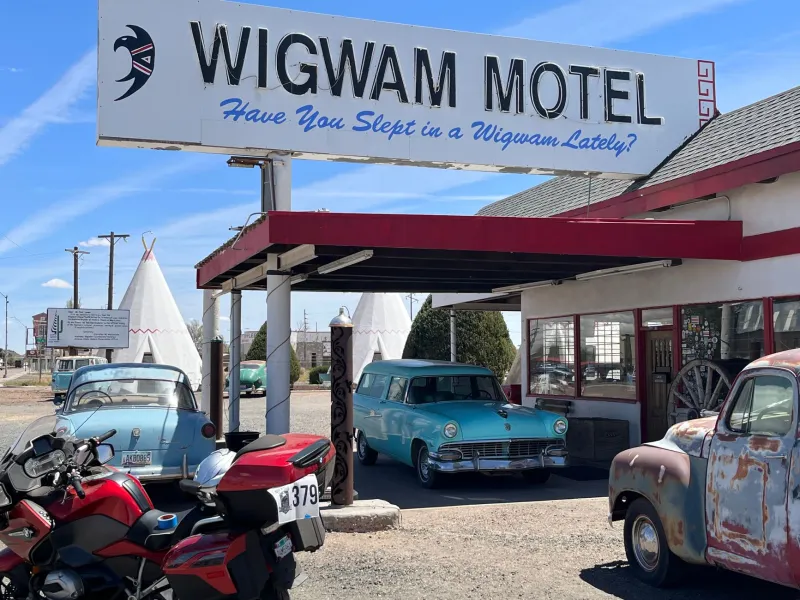
There's something about a roadside motel that feels distinctly, almost mythologically American. The neon sign glowing against a darkening sky. The parking lot right outside your door. The ice machine down the hall. The thin curtains and the hum of the air conditioner. Whether you remember it from a family vacation or a late-night road trip, the motel occupies a particular corner of the American imagination — equal parts freedom, nostalgia, and low-budget adventure.
But the motel wasn't invented to be romantic. It wasn't conceived by a tourism entrepreneur with a vision for the open road. It grew out of something far more practical and considerably less poetic: the need to move people — and occasionally bodies — across long distances by car in an era when the infrastructure to support that movement barely existed.
The Road Before the Road Trip
In the first decade of the 20th century, the automobile was still a novelty, and American roads were genuinely terrible. Most were unpaved, poorly marked, and completely impassable in wet weather. There were no highway systems, no standardized routes, and no roadside services to speak of. Traveling more than fifty miles by car was an undertaking that required planning, mechanical knowledge, and a certain tolerance for the unexpected.
The traveler's options for overnight accommodation were limited to hotels in town centers — which meant driving into a city, finding a livery or garage for the car, and paying city hotel prices. For working-class travelers, salesmen, and anyone moving goods or people between rural areas, this was impractical and expensive. Something closer to the road, cheaper, and more accessible was needed.
The earliest roadside accommodations were almost comically informal. Farmers along well-traveled routes began renting out rooms, barns, and spare outbuildings to motorists who ran out of daylight. Some put up hand-lettered signs. Others just relied on word of mouth. By the 1910s, "tourist camps" — open fields where travelers could pitch tents or park their cars — had appeared along major routes, often operated by local municipalities as a way to attract passing trade.
These camps evolved. Wooden cabins replaced tents. Shared bathroom facilities were added. Small clusters of individual units, each with a door that opened directly to the parking area, began to replace the communal camp model. By the late 1920s, the "motor court" — a U-shaped or linear arrangement of individual cabins around a central parking area — was a recognizable roadside feature across the South and Midwest.
The Funeral Industry's Quiet Contribution
Here's the part of the story that doesn't make it onto the vintage postcards.
In the early automobile era, one of the most pressing logistical challenges facing American funeral homes was the transportation of remains across state lines. Embalming had made longer-distance transport possible, but rail travel was expensive, complicated, and required coordination with multiple companies. As automobile travel improved and hearses became practical vehicles, funeral directors began making long-distance road trips to collect or deliver remains — sometimes traveling hundreds of miles over multiple days.
These drivers needed somewhere to stop. Hotels in town centers were inconvenient for a hearse and its cargo. The early motor courts — private, discreet, with parking directly accessible from the room — were a practical solution. Several historians of American roadside culture have noted that the funeral industry was among the earliest consistent commercial users of roadside lodging, and that the design features that made motor courts appealing to funeral workers — direct car access, privacy, no lobby to navigate — were the same features that would later make them attractive to traveling families.
The motel wasn't built for hearses. But the hearse helped establish that there was a market for exactly this kind of accommodation, and the design language of that market was shaped in part by the need for discretion and direct road access.
The Word That Changed Everything
The word "motel" itself appeared in 1925, coined by architect Arthur Heineman for his Milestone Mo-Tel in San Luis Obispo, California — a portmanteau of "motor" and "hotel" that captured something new: this wasn't a hotel you happened to arrive at by car. The car was the whole point. You parked outside your own door. You came and went without a front desk. You paid a flat nightly rate and nobody asked questions.
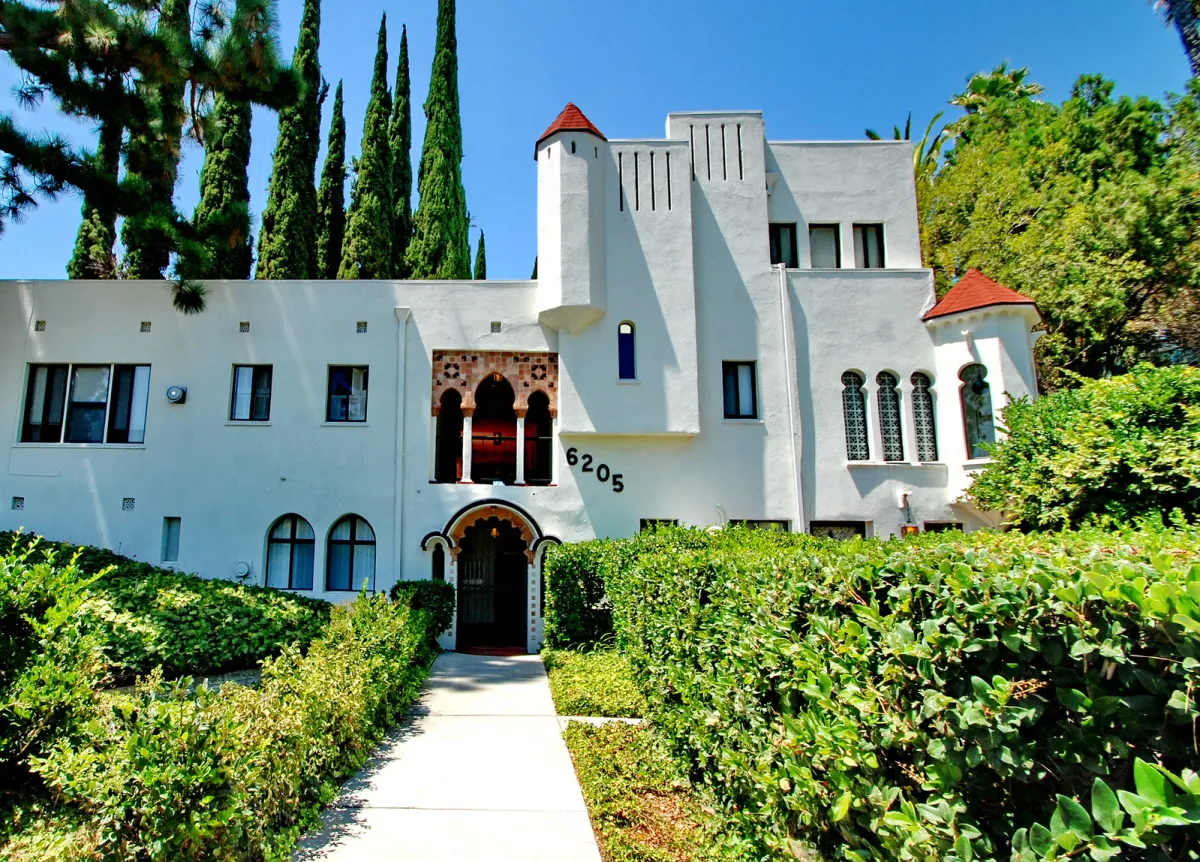 Photo: Arthur Heineman, via live.staticflickr.com
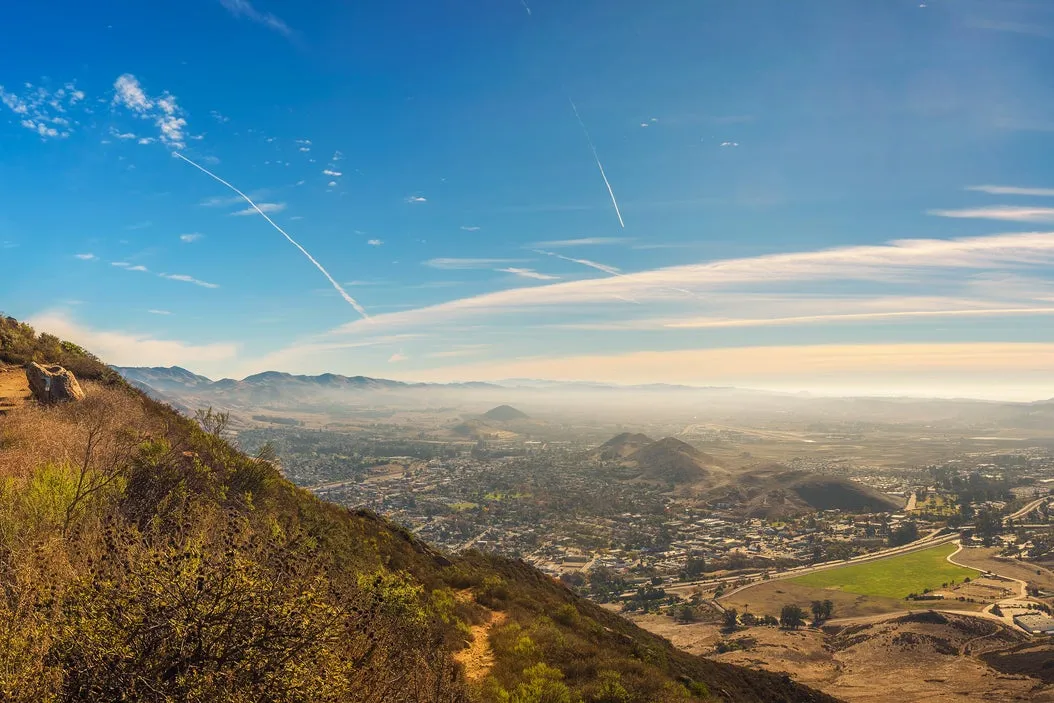 Photo: San Luis Obispo, via static.independent.co.uk
Through the 1930s, motels remained functional and unglamorous. They served traveling salesmen, migrant workers following harvest routes, and families relocating across the country during the Dust Bowl. The Depression-era motel was cheap shelter, nothing more.
Then came the war, and after the war, came everything else.
The Postwar Reinvention
The Federal Aid Highway Act of 1956 changed the physical landscape of America faster than almost any peacetime legislation in history. Forty-one thousand miles of interstate highway were planned and funded, connecting cities that had previously been a full day's drive apart. Automobile ownership exploded. Suburban families, flush with postwar prosperity and newly mobile, discovered that they could load the station wagon on a Friday afternoon and be somewhere completely different by Sunday.
The motel industry recognized the moment and reinvented itself accordingly. Holiday Inn, founded by Kemmons Wilson in 1952 after a frustrating family road trip to Washington D.C., standardized the motel experience with consistent pricing, air conditioning, and a children-stay-free policy that made it explicitly family-friendly. Wilson's insight was simple but revolutionary: families didn't want a flophouse. They wanted somewhere clean, predictable, and affordable. They wanted the car right outside the door. They wanted a pool.
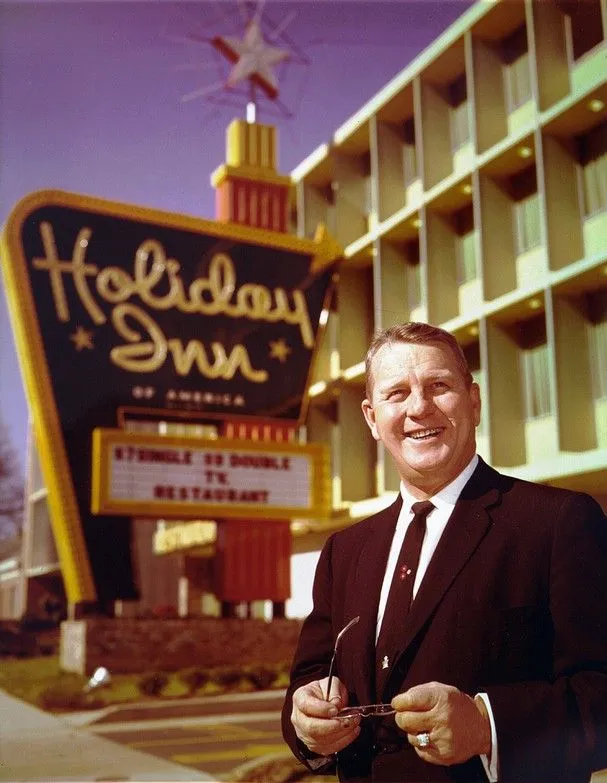 Photo: Kemmons Wilson, via i.pinimg.com
Marketing followed. Travel magazines and automobile club publications began running features on road trips as a distinctly American form of freedom — the open road, the spontaneous stop, the discovery of a roadside attraction or a stretch of coastline you'd never planned to see. The motel was recast as the enabling infrastructure of adventure rather than a practical necessity.
By the 1960s, the roadside motel had become a cultural symbol as much as a commercial category. It appeared in films, novels, and advertising as shorthand for independence, transience, and the particular American fantasy of starting over somewhere new.
The Neon Relic That Endures
Today, the motel occupies an interesting cultural position. The big chains have largely moved upmarket, and the independent roadside motel — the one with the hand-painted sign and the owner who lives in the unit at the end — is a disappearing fixture. But it hasn't disappeared from the imagination. Vintage motel aesthetics are everywhere in design, photography, and film. The neon vacancy sign is practically a national icon.
Nobody sat down to invent the American summer road trip. Nobody designed the motel as a symbol of freedom. It grew from practical necessity — the traveling salesman, the long-haul driver, the funeral industry's logistical problem — and was slowly, almost accidentally, transformed by prosperity, highways, and good marketing into something that felt like it had always meant something more.
That's usually how the best American myths get made.