A Son's Suffering, a Father's Guilt, and the Drug That Quietly Conquered Every Medicine Cabinet in America
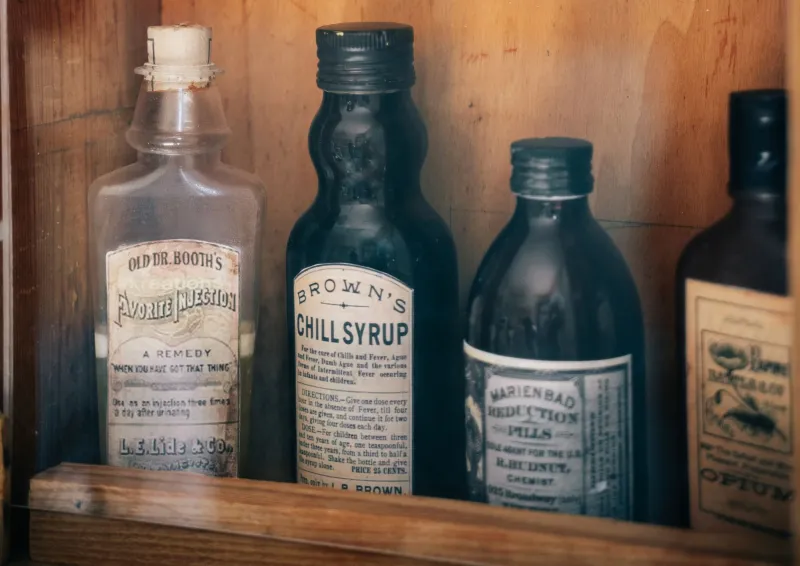
There is almost certainly aspirin in your home right now. Maybe in the medicine cabinet, maybe in a kitchen junk drawer, maybe rattling around in the bottom of a bag. It's so unremarkable, so constant a presence, that most people never think about where it came from. It feels like it has always existed — like it was simply discovered, obvious and inevitable, waiting to be found.
The actual story is messier, more human, and considerably stranger than that.
The Problem With Willow Bark
The history of aspirin begins long before aspirin existed. For thousands of years, healers across multiple cultures had noticed that chewing the bark of a willow tree could reduce fever and dull pain. Ancient Egyptians documented it. Hippocrates recommended it. Native American tribes used it. The active compound — a substance called salicin — was eventually isolated by European chemists in the early 1800s.
The problem was that salicin, when refined into salicylic acid for medicinal use, was brutal on the stomach. Patients who took it for arthritis or rheumatism often ended up trading joint pain for nausea, vomiting, and severe gastric irritation. The cure was nearly as unpleasant as the condition.
Enter a young German chemist named Felix Hoffmann.
A Father's Pain and a Son's Determination
Hoffmann worked at Bayer, a German chemical company that had built its business manufacturing synthetic dyes before pivoting toward pharmaceuticals in the late 1800s. In 1897, Hoffmann was watching his father suffer through rheumatoid arthritis. The elder Hoffmann was taking sodium salicylate — the standard treatment — and finding it nearly unbearable. The stomach problems were relentless.
Felix, motivated by something more personal than professional ambition, began searching the chemical literature for an alternative. He found a reference to a compound that had been synthesized decades earlier but never seriously studied for medical use: acetylsalicylic acid. Hoffmann refined the synthesis process, produced a purer, more stable version of the compound, and tested it.
It worked. The pain relief was comparable to sodium salicylate, but the stomach irritation was dramatically reduced. His father's condition improved. Hoffmann brought his findings to Bayer's pharmacology department.
Bayer's head of pharmacology, a man named Heinrich Dreser, was initially unimpressed. He had another drug he was more excited about — a compound Bayer was about to launch under the brand name Heroin, marketed as a cough suppressant and morphine substitute. Dreser thought that was the future. Acetylsalicylic acid struck him as minor.
History, as it turned out, had different plans.
The Name That Launched a Billion Tablets
Bayer eventually moved forward with acetylsalicylic acid, and in 1899 began distributing it to physicians under a new brand name: Aspirin. The name was a construction — a from acetyl, spir from Spiraea ulmaria, the plant species from which salicylic acid had previously been derived, and in as a standard pharmaceutical suffix of the era.
The company's marketing was aggressive and methodical. Bayer sent samples directly to doctors across Europe and the United States, bypassing the traditional pharmacy channel entirely. They published clinical studies. They advertised in medical journals. Within a year, aspirin was being prescribed for headaches, fevers, colds, arthritis, and a growing list of other conditions.
American consumers encountered aspirin just as the country was entering a new era of patent medicine skepticism. Congress had passed the Pure Food and Drug Act in 1906, cracking down on the fraudulent tonics and cure-alls that had dominated American drugstores. Aspirin, backed by clinical evidence and sold by a reputable company, arrived at precisely the right moment to benefit from that shift in consumer trust.
The War That Made It American
World War I changed aspirin's trajectory in ways Bayer never anticipated — and not in the company's favor. When the United States entered the war in 1917, the government seized Bayer's American assets, including the trademark on the aspirin name. After the war, the trademark was sold at auction as part of German war reparations.
The practical effect was that aspirin became a generic term in the United States. Any manufacturer could produce and sell the compound under that name. The floodgates opened. American pharmaceutical companies poured into the market. Prices dropped. Availability exploded. By the 1920s, aspirin was everywhere — in drugstores, in grocery stores, in mail-order catalogs.
Bayer eventually re-entered the American market, but the brand never fully recovered its monopoly position. What it lost in market control, the drug gained in cultural ubiquity. Aspirin wasn't one company's product anymore. It was simply the painkiller — the default, the fallback, the thing you reached for first.
The Discovery That Saved Aspirin's Future
By the 1960s and 70s, aspirin faced genuine competition for the first time. Ibuprofen arrived in the 1960s. Acetaminophen — marketed as Tylenol — positioned itself as gentler on the stomach. Aspirin's market share slipped. It began to look like a relic, something your grandparents took.
Then came the heart research.
In the 1970s and 80s, studies began showing that aspirin's blood-thinning properties could dramatically reduce the risk of heart attacks and strokes. The same mechanism that made it effective against inflammation also prevented the blood clots responsible for cardiac events. Doctors began recommending low-dose daily aspirin to patients at cardiovascular risk. The drug that had been written off as old-fashioned became a frontline tool in America's biggest health challenge.
Today, Americans consume roughly 30 billion aspirin tablets every year. It remains one of the most studied drugs in medical history, with ongoing research exploring its potential role in cancer prevention and dementia treatment. A compound first isolated from willow bark, refined by a German chemist trying to help his father, turned into a global pharmaceutical empire, dismantled by a war, rebuilt as a cultural institution, and then saved by cardiology.
All of that, sitting in a little bottle in your medicine cabinet.
Most things this ordinary have a story this extraordinary. You just have to know where to look.