Scheduled for the Dead: How Funeral Home Logistics Put a Watch on Every American Wrist
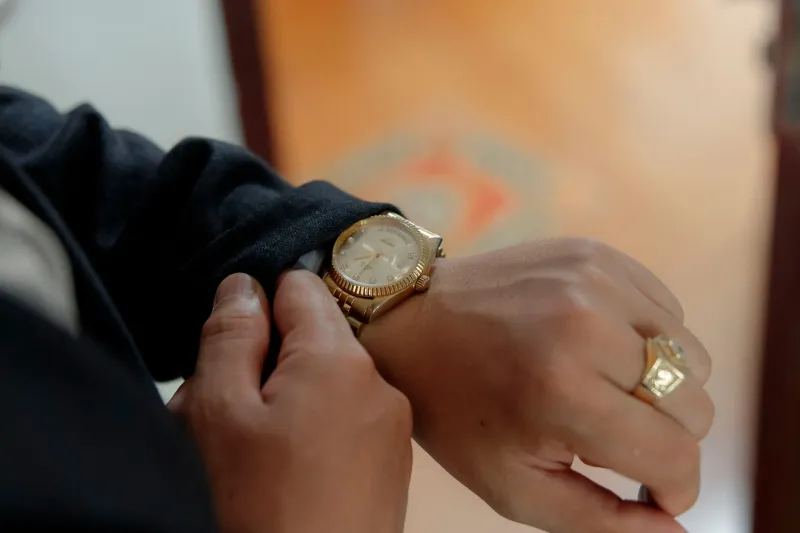
Pull back your sleeve right now and look at your wrist. If there's a watch there — mechanical, digital, smartwatch, or otherwise — you're participating in a habit that would have struck most American men in 1890 as somewhere between eccentric and embarrassing. Wristwatches, in the nineteenth century, were a European fashion accessory worn primarily by wealthy women. They were delicate, decorative, and widely considered impractical for anyone doing actual work.
Serious American men carried pocket watches. Heavy ones, in gold or silver, attached to a chain and tucked into a vest pocket. The pocket watch was a statement of substance. The wristwatch was a bracelet with a clock face.
The journey from that cultural consensus to the world we live in now — where a man without a watch on his wrist seems vaguely underdressed — runs through some unexpected places. A funeral home in the rural Midwest. A railroad scheduling crisis. A world war. And a slow, grinding shift in what American men decided it meant to be punctual.
The Problem With Burying People at Three Churches
The precise origin story of the American wristwatch's social rehabilitation is not the kind of thing that gets written into history books, which is part of why it's been largely forgotten. But the account that surfaces repeatedly in early twentieth-century trade publications for the funeral industry goes something like this.
Sometime in the 1890s, a funeral home director operating in rural Ohio or Indiana — the accounts vary on the state — found himself managing a logistical problem that was, by the standards of his profession, genuinely serious. His operation served several small communities, each with its own church and cemetery. On days when multiple services were scheduled, he needed his staff — drivers, pallbearers, attendants — to be at specific locations at specific times without any means of coordinating them in real time.
Shouting across a graveyard was not an option. Sending a runner between sites took too long. The pocket watch each man carried solved the timekeeping problem but created a new one: a man with both hands occupied carrying a casket cannot easily reach into his vest pocket to check the time.
The director's solution was practical to the point of being obvious in retrospect: he had simple watch mechanisms fitted into wristbands and issued them to his staff. The watches were cheap, not particularly accurate, and considered slightly ridiculous by the men who wore them. But they worked. A pallbearer could glance at his wrist and know, without breaking stride or adjusting his grip, whether he was on schedule.
Other funeral homes in the region noticed. The practice spread quietly through the industry — not because anyone thought it was fashionable, but because coordinating the dead required a level of logistical precision that pocket watches couldn't comfortably support.
The Railroads Discover the Same Problem
The funeral industry wasn't the only sector wrestling with the limitations of pocket watches in the late 1800s. American railroads were running on schedules of increasing complexity, and the consequences of timekeeping errors were considerably more dramatic than a delayed burial.
The Kipton, Ohio, rail disaster of 1891 — in which two passenger trains collided because an engineer's pocket watch had stopped for four minutes and then restarted — killed nine people and triggered a nationwide overhaul of railroad timekeeping standards. The industry response focused initially on better pocket watches: more accurate movements, standardized synchronization procedures, strict inspection protocols.
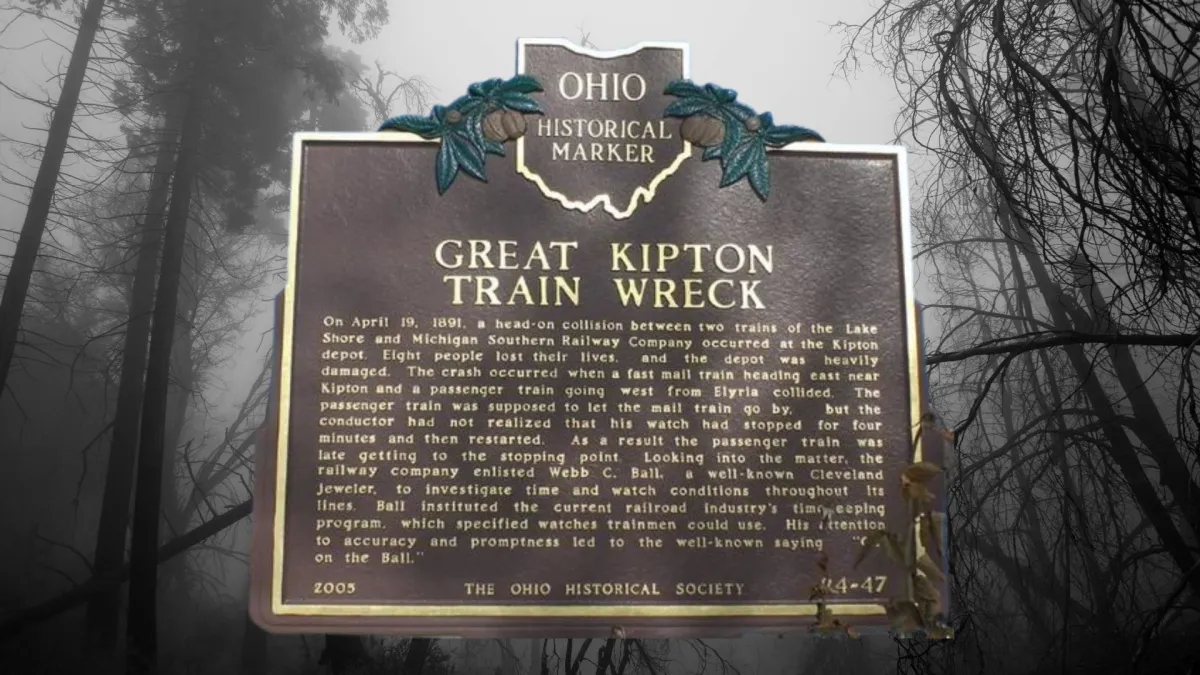 Photo: Kipton, Ohio, via static.wixstatic.com
But as train schedules grew more complex and crews more mobile, the same problem the funeral director had encountered kept resurfacing. A man switching between tasks — coupling cars, managing signals, coordinating with station agents — needed to check the time constantly and with both hands often occupied. Pocket watches required a free hand and a moment of deliberate attention. Wristwatches did not.
By the early 1900s, railroad workers in certain divisions had begun wearing wristwatches on their own initiative, tolerating the social stigma because the practical advantage was too obvious to ignore. Supervisors who might have mocked the practice in social settings quietly permitted it on the job.
The watch was migrating from the wrist of wealthy European women to the wrist of American working men — not through fashion, but through friction.
The War That Made It Masculine
What finally stripped the wristwatch of its feminine reputation in America was not any gradual shift in cultural attitudes. It was a war.
American soldiers entering World War I were issued wristwatches as standard equipment. The military logic was identical to the funeral director's: a man in a trench, rifle in hand, under fire, cannot reach into his pocket to check the time before going over the top. Coordinated attacks required synchronized timing. Synchronized timing required accessible timepieces. Wristwatches were the only option that worked.
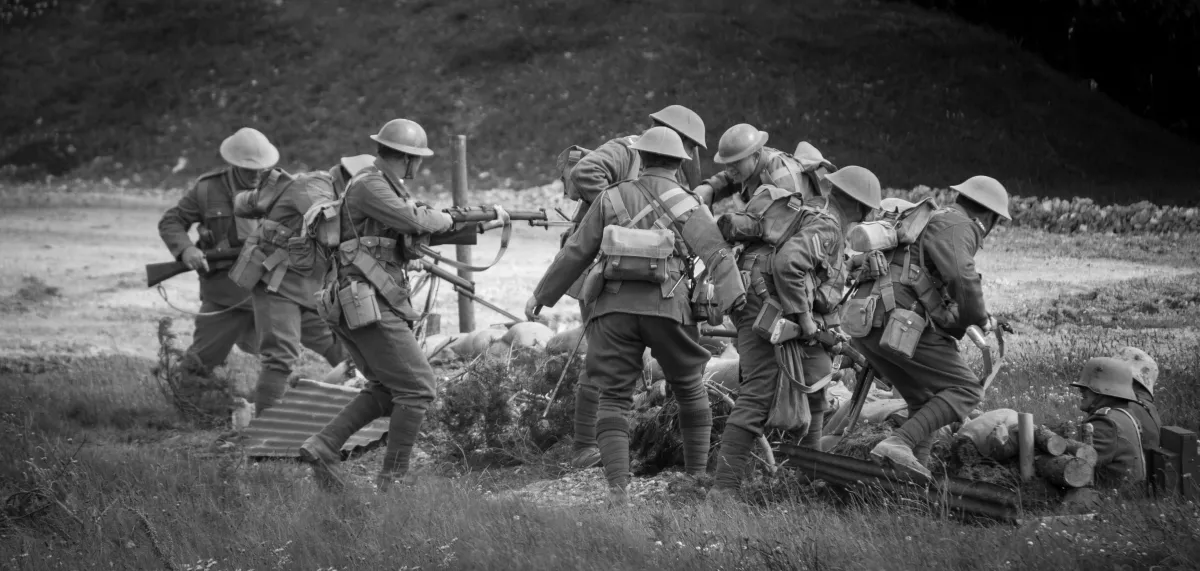 Photo: World War I, via brewminate.com
Nearly five million American men served during the war. A significant portion of them came home with wristwatches on their wrists and a completely different relationship to the object. It was no longer a woman's bracelet. It was equipment. It was something you wore in combat. The men who had carried pocket watches into the war and felt vaguely superior about it discovered, in the mud of the Western Front, that their attitude had been a luxury of peacetime.
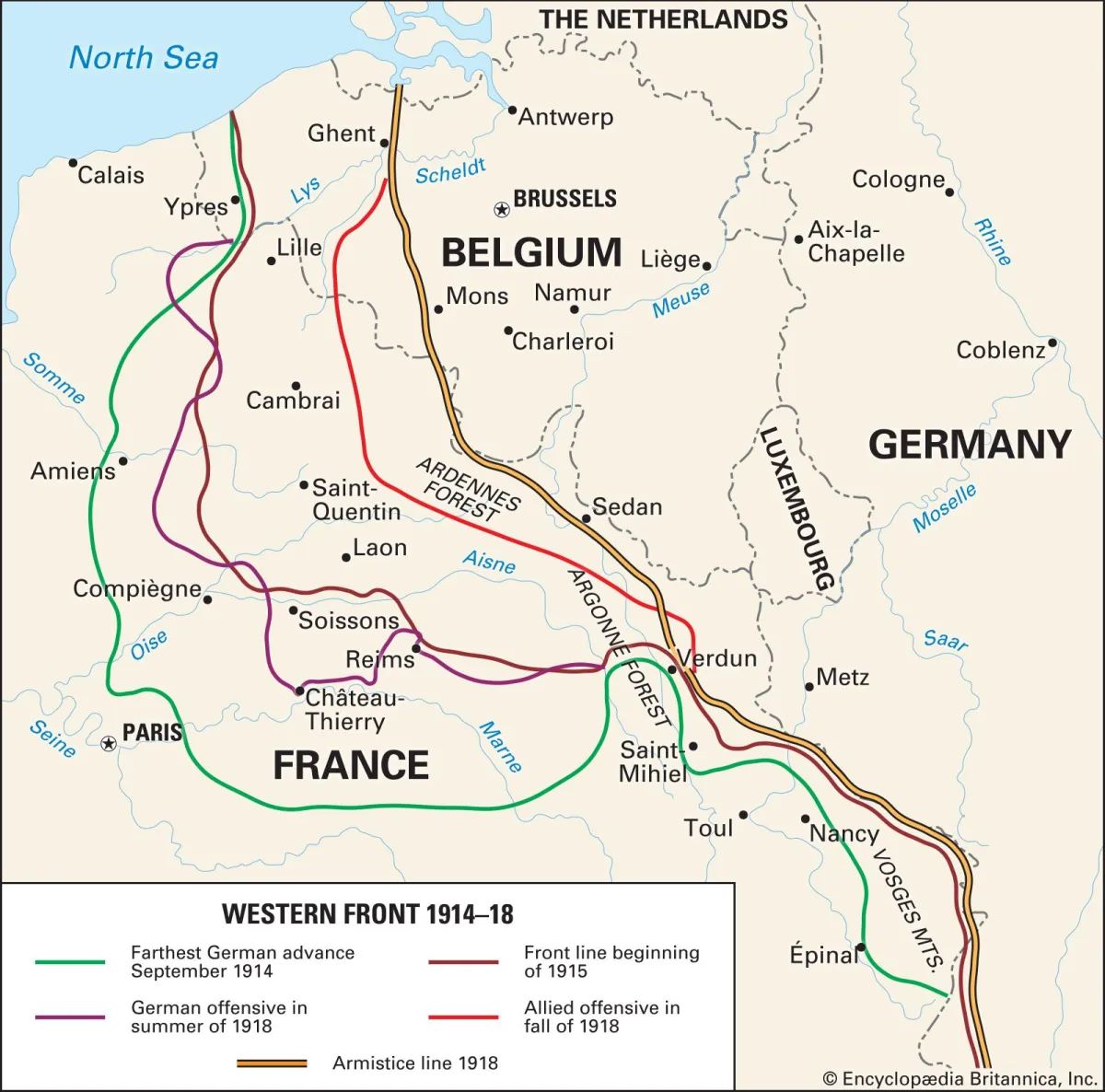 Photo: Western Front, via cdn.britannica.com
By the mid-1920s, wristwatch sales in the United States had overtaken pocket watch sales for the first time. The shift was so rapid that pocket watch manufacturers, who had dominated the American market for generations, were caught almost entirely off guard.
The Object That Outlasted Its Reasons
The practical arguments that drove the wristwatch onto the American wrist have largely dissolved. Nobody is coordinating burials across rural churchyards by wrist-glance anymore. Railroad operations are managed by digital systems that have nothing to do with the watch on a conductor's arm. Military personnel have access to communication technology that makes synchronized watches a secondary concern.
And yet the wristwatch remains. It has become something more durable than practical: a signal of seriousness, a marker of style, a quiet assertion that the person wearing it is someone who pays attention to time. Luxury watchmakers sell mechanical movements for tens of thousands of dollars to people who carry a smartphone that keeps more accurate time in their pocket. The watch on the wrist is no longer really about knowing what time it is.
It is, in some way that is difficult to articulate but easy to feel, about being the kind of person who wears one.
That identity — built on associations of discipline, competence, and masculine utility — was assembled piece by piece from some unlikely raw material: the scheduling needs of a funeral home, the disaster-prevention logic of a railroad industry, and the battlefield practicalities of a war that nobody wanted to fight.
The watch on your wrist is, at its origin, a tool for managing the logistics of death. It just cleaned up very well.