Squeeze Here: The Strange Medical History of the Object Sitting on Your Desk
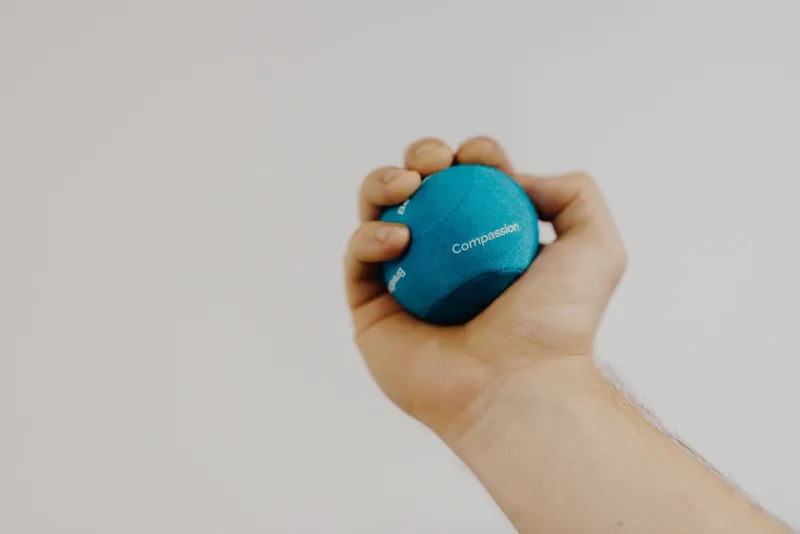
Somewhere in America right now, millions of people are squeezing small foam objects at their desks. Some are shaped like brains. Some are shaped like houses, cars, globes, or little smiling suns with a company logo stamped on the side. Some are just plain spheres, worn smooth from years of unconscious compression.
The stress ball is so common it barely registers as an object anymore. It's just there — in the desk drawer, in the conference room, in the swag bag from the industry conference you attended four years ago and barely remember. Nobody thinks about where it came from.
Which is a shame, because the origin story is genuinely strange.
Before the Foam, There Was the Clinic
To find where the stress ball actually started, you have to go back to the early and mid-20th century, when a discipline called occupational therapy was still finding its footing as a legitimate medical field.
Occupational therapy — the practice of using structured, purposeful activities to help patients recover physical and mental function — grew significantly during and after World War I, when hospitals were overwhelmed with soldiers returning from the front with both physical injuries and what we now recognize as post-traumatic stress. Therapists needed tools that could help patients rebuild fine motor skills, manage anxiety, and stay mentally engaged during long recovery periods.
One of the simplest and most effective tools was a small, squeezable object. Patients with hand injuries used them to rebuild grip strength. Patients with anxiety used the repetitive motion of squeezing and releasing to self-regulate — to give their nervous system something to do with the tension that had nowhere else to go.
This wasn't glamorous medicine. It was practical and low-tech. But it worked.
The Correctional System Connection
Here's the part of the story that tends to surprise people. One of the most documented early uses of therapeutic squeezing exercises wasn't in a hospital at all — it was in the American correctional system.
Occupational therapy programs in prisons and psychiatric facilities expanded significantly through the mid-20th century, driven by a philosophy that purposeful activity could reduce aggression, improve mental health outcomes, and give incarcerated people skills they could use after release. Therapists working in these environments needed cheap, durable, safe tools that couldn't be weaponized.
A small, soft, compressible object checked every box. It required no sharp edges. It couldn't be easily modified into something dangerous. It gave restless hands something to do during long periods of confinement. And the repetitive physical action — squeeze, release, squeeze, release — had measurable calming effects on the nervous system.
Documentation from occupational therapy programs in correctional facilities from the 1950s through the 1970s consistently references hand-strengthening and stress-reduction exercises using soft, compressible balls. These weren't branded products. They were often homemade — foam cut from larger blocks, fabric-wrapped rubber, or repurposed sports equipment.
The therapeutic logic was solid long before the consumer product existed.
The 1980s and the Birth of a Product
The transition from clinical tool to commercial object happened in the 1980s, and like many product origin stories, it's a little murky.
The most widely cited origin point is a 1988 claim by Alex Carswell, a Canadian businessman who says he manufactured and sold one of the first commercial stress balls — a small foam sphere marketed specifically as a tool for office workers dealing with job-related tension. Whether Carswell was truly first or simply the most vocal claimant is hard to verify, but the timing lines up with a broader cultural moment.
The 1980s were a decade obsessed with stress. Corporate America was expanding rapidly, workdays were getting longer, and a new vocabulary around workplace burnout was entering mainstream conversation. Books about stress management were bestsellers. Relaxation tapes were a booming industry. The idea that white-collar workers needed tools to cope with psychological pressure — tools they could keep at their desks, use discreetly, and not feel embarrassed about — was commercially ripe.
A small, squeezable foam ball fit perfectly into that moment. It required no explanation. It didn't look like a medical device. It looked like a toy. And toys, even for adults under pressure, don't carry stigma.
How the Logo Got There
The leap from wellness product to promotional giveaway happened fast, and it's probably the single biggest reason stress balls are everywhere today.
Sometime in the late 1980s and early 1990s, promotional merchandise companies realized that stress balls were cheap to manufacture, easy to customize, and had unusually high retention rates — people kept them. Unlike a pen that runs out of ink or a notepad that gets used up, a foam ball just sits on your desk indefinitely, your company's name pressed against someone's palm every time they reach for it during a tense phone call.
By the mid-1990s, stress balls had become one of the most popular items in the promotional products industry. Trade shows handed them out by the thousands. Banks gave them to new account holders. Insurance companies mailed them in welcome packets. Real estate agents left them behind after open houses.
The therapeutic origin was completely invisible by this point. The clinical logic — that repetitive compression genuinely activates the parasympathetic nervous system and helps regulate stress responses — had been replaced by something simpler: it's fun to squeeze, and it keeps your brand in someone's hand.
The Science That Justified the Habit
Interestingly, the neuroscience eventually caught up with what occupational therapists had known empirically for decades. Research into tactile stimulation and stress regulation confirmed that repetitive hand movements — including squeezing — can activate calming neural pathways, reduce cortisol levels, and provide a physical outlet for psychological tension.
In other words, the therapy worked. The clinical instinct that drove those early prison and hospital programs wasn't guesswork — it was good medicine. The fact that it got repackaged as a corporate tchotchke doesn't change the underlying biology.
Your body doesn't know the difference between a medically prescribed therapeutic tool and a foam ball with a mortgage company's phone number on it. It just knows that squeezing something feels better than not squeezing something.
The Object That Outlasted Its Origin
The stress ball is a small object with an outsized history. It traveled from occupational therapy wards to correctional facilities to corporate America, losing its clinical identity at every step but never losing its function. It works the same way it always did — it just stopped knowing why.
Next time you reach for that foam thing in your desk drawer, you're participating in a therapeutic tradition that's nearly a century old. The logo on the side is new. The instinct behind the squeeze is not.