The Guilt on Your Receipt: How Tipping Became America's Most Uncomfortable Tradition
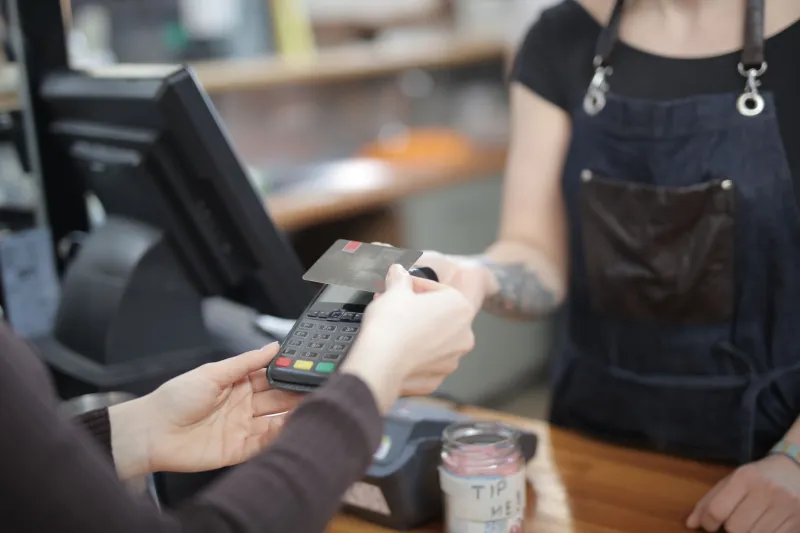
You've been there. The meal is over. The check arrives. You glance at the total, do the mental math, and feel that familiar low-grade anxiety about what percentage to leave. Twenty percent? Eighteen? Is fifteen percent insulting now? Is twenty-five the new normal? You leave something, slide out of the booth, and walk to your car quietly second-guessing yourself.
This is one of the most universal experiences in American dining. And almost nobody knows where it came from.
The story of tipping in America isn't a story about generosity. It's a story about wages, race, and a post-Civil War economy that found a clever way to make customers pay for what employers refused to.
It Didn't Start Here
Tipping has European roots — the word itself is thought to derive from an old English phrase meaning a small, swift payment — but the practice was never deeply embedded in European culture the way it became in America. In 18th and 19th century England, guests at private homes would sometimes leave small coins for household servants before departing. The gesture was personal, discretionary, and rare.
When the practice crossed the Atlantic in the mid-1800s, it arrived with wealthy Americans who had toured Europe and picked up the habit as a marker of sophistication. For a certain class of traveler, tipping felt cosmopolitan. Refined. It was a way of performing worldliness.
But American tipping didn't stay an affectation of the elite for long. It mutated into something entirely different — and the transformation happened in the years immediately following the Civil War.
The Wage Loophole That Built an Industry
After emancipation, formerly enslaved people entered the labor market in massive numbers, many of them taking service jobs in restaurants, hotels, and on the expanding railroad network. Employers in these industries — particularly in the South, but not exclusively — discovered a convenient arrangement: they could hire Black workers and pay them little to nothing in actual wages, on the basis that tips from customers would make up the difference.
This wasn't subtle. The Pullman Company, which operated the railroad sleeping cars that became a fixture of American travel after the Civil War, built an entire business model around it. Pullman porters — almost exclusively Black men — were paid wages so low that their income was structurally dependent on tips from passengers. The company explicitly pointed to tipping as justification for keeping wages near zero.
Restaurants adopted similar logic. Waitstaff, particularly in establishments that served white clientele and employed Black servers, were classified as tipped workers — a legal category that allowed employers to pay below the standard minimum wage on the assumption that tips would compensate. That legal framework didn't disappear. In fact, it's still federal law in the United States today.
Under the Fair Labor Standards Act, tipped employees can be paid a federal minimum of just $2.13 per hour — a number that hasn't changed since 1991 — with the expectation that tips will bring their total compensation up to at least the federal minimum wage of $7.25. In practice, enforcement of that floor is inconsistent, and many tipped workers fall through the cracks entirely.
The Anti-Tipping Movement Nobody Remembers
Here's something that gets left out of most conversations about tipping: for a brief period in the early 20th century, Americans actually tried to abolish it.
Between roughly 1900 and 1915, a genuine anti-tipping movement emerged in the United States, driven by labor advocates, progressive journalists, and ordinary citizens who found the practice degrading — both to workers who were forced to depend on the goodwill of strangers, and to customers who were essentially being pressured into subsidizing employer wages.
William Scott, an economist who published a book called The Itching Palm in 1916, argued that tipping was fundamentally un-American — a feudal holdover that created a servile class and rewarded obsequiousness over competence. Several states actually passed anti-tipping laws in this period. Mississippi, Arkansas, Iowa, and others made it illegal to offer or accept tips in certain contexts.
Every single one of those laws was eventually repealed. The restaurant and hotel industries lobbied hard against them, and the economic logic of tipping — which transferred wage costs from employers to customers — was simply too profitable to abandon.
How the Guilt Got Manufactured
By the mid-20th century, tipping had become so normalized in American dining culture that it stopped feeling like an economic mechanism and started feeling like a moral one. Not tipping wasn't just cheap — it was rude. It was an insult to your server's dignity. The social pressure around tipping intensified precisely because the financial stakes for workers were so high.
Restaurant industry trade groups actively promoted this framing. If customers felt that tipping was a matter of personal character rather than a structural wage subsidy, they were more likely to tip consistently and generously — which meant employers could continue to justify poverty-level base wages.
The guilt, in other words, was partly engineered.
Digital payment systems turbocharged the pressure in the 2010s. Tablet-based checkout screens at coffee shops, food trucks, and take-out counters began displaying tip prompts — often defaulting to 20%, 25%, or 30% — for transactions that had never previously involved tipping at all. The screen rotates toward you. The cashier is standing right there. The social cost of pressing "no tip" feels enormous.
Why We Can't Seem to Quit It
The United States is nearly alone among wealthy nations in maintaining a tipping culture this entrenched. In Japan, tipping is considered rude. In most of Europe, it's optional and modest. In Australia, it barely exists. These countries solved the same problem — paying service workers fairly — through higher base wages and different labor regulations.
America has tried. A handful of restaurants have experimented with tip-free models, raising menu prices to pay staff a living wage. Some have succeeded. Many have closed or reverted, citing customer resistance to higher listed prices even when total cost is equivalent.
And so the tradition holds. Born from a post-Civil War wage loophole, shaped by decades of industry lobbying, and sustained by genuine social pressure and financial necessity for millions of workers, tipping has become one of America's most durable and least examined customs.
Next time the screen rotates toward you, you'll know exactly how it got there.