Rationed Into Ritual: How War Shortages Accidentally Invented the American Backyard BBQ
When Cooking Moved Outside
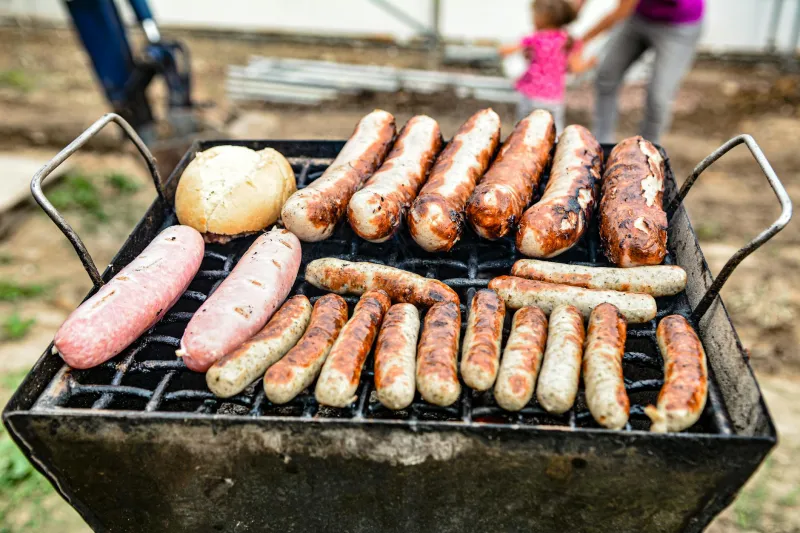
Every summer weekend, millions of American families fire up their backyard grills for what feels like the most natural thing in the world—cooking outdoors, gathering around the fire, celebrating the simple pleasure of grilled food and good company. But this quintessentially American tradition isn't ancient at all. The suburban backyard barbecue was accidentally invented by World War II rationing policies that forced families to completely rethink how, where, and when they cooked.
Before the 1940s, outdoor cooking in America was primarily associated with camping, rural life, or special community events. Middle-class suburban families cooked indoors, in proper kitchens, using gas or electric stoves. Cooking outside was something you did when you had no other choice—not something you chose for leisure.
The Rationing Revolution
World War II changed everything. The U.S. government implemented comprehensive rationing programs that restricted access to metal, fuel, and countless household goods needed for the war effort. Suddenly, the indoor cooking that Americans took for granted became expensive, complicated, and sometimes impossible.
Metal rationing hit especially hard. New kitchen appliances disappeared from stores, existing appliances couldn't be repaired when they broke, and even replacement parts became unavailable. Gas and electricity were rationed in many areas, making indoor cooking both costly and unpatriotic—every BTU used at home was energy not available for war production.
Families needed alternatives, and they found them in their backyards.
The Improvised Solution
American ingenuity kicked into overdrive. Families began constructing outdoor cooking setups using whatever materials they could find—old metal drums, salvaged grates, bricks from demolished buildings, and improvised fuel sources. What started as necessity quickly revealed unexpected benefits.
Outdoor cooking used less rationed fuel. It kept heat and smoke out of houses during hot summers. Most importantly, it brought families and neighbors together in new ways. The shared challenge of outdoor cooking created impromptu community gatherings as neighbors shared equipment, techniques, and ingredients.
These weren't elegant affairs—they were practical solutions to wartime scarcity. But they worked, and they felt good in ways that surprised everyone involved.
The Charcoal Discovery
One of the most significant changes came from fuel necessity. With gas and electricity rationed, families needed alternative cooking fuels. Charcoal, which had been primarily an industrial product, suddenly became a household necessity.
Charcoal had several advantages over rationed fuels: it was made from abundant American wood, it didn't require the metals needed for war production, and it could be produced locally. Companies like Kingsford, which had been supplying charcoal primarily to industrial users, quickly pivoted to serve the emerging residential market.
The distinctive flavor that charcoal imparted to food became part of the outdoor cooking experience. What had started as a fuel substitute became a flavor preference that would define American BBQ culture for generations.
The Suburban Explosion
The war ended in 1945, but the outdoor cooking habits it created didn't disappear. Instead, they merged perfectly with the massive suburban expansion of the late 1940s and 1950s. Returning veterans used GI Bill benefits to buy houses with actual yards—space that their urban apartments had never provided.
Suburban developers quickly recognized the appeal of outdoor living. New housing developments began including features specifically designed for outdoor cooking and entertaining—patios, built-in grills, and landscaping that created outdoor "rooms" for family gathering.
The backyard became an extension of the American home, and the grill became its centerpiece.
The Mythology Machine
As suburban BBQ culture exploded in the 1950s, it developed its own mythology that completely obscured its wartime origins. Advertising campaigns, television shows, and popular culture began presenting backyard grilling as an ancient American tradition, tied to frontier heritage and masculine outdoor skills.
The image of the suburban dad as "grill master" became a powerful cultural symbol, suggesting that outdoor cooking was a natural expression of American masculinity and leisure. Companies like Weber revolutionized grill design, creating equipment that made outdoor cooking easier and more sophisticated than ever before.
By the 1960s, backyard barbecuing had become so embedded in American culture that few people remembered its recent, practical origins in wartime scarcity.
The Social Engineering Accident
What makes the BBQ story remarkable is how completely accidental its social impact was. Government rationing policies were designed to support the war effort, not to create new social traditions. But by forcing families to cook outdoors, rationing accidentally engineered one of the most enduring changes in American domestic life.
The outdoor cooking born from wartime necessity created new patterns of family interaction, neighborhood socializing, and leisure activity that proved more appealing than anyone had anticipated. When the rationing ended, families chose to continue practices that had been imposed on them by scarcity.
The Modern Legacy
Today, the American backyard BBQ industry generates over $5 billion annually. Grilling equipment has become incredibly sophisticated, with outdoor kitchens rivaling indoor ones in complexity and cost. But the fundamental appeal remains the same as it was during those first wartime experiments—cooking outdoors brings people together in ways that indoor cooking cannot match.
The BBQ tradition that emerged from 1940s rationing has also influenced American social patterns far beyond cooking. The backyard gathering model has shaped everything from suburban design to entertainment culture to family holiday traditions.
The Hidden Foundation
Perhaps most remarkably, the wartime origins of American BBQ culture have been almost completely forgotten. Ask most Americans about backyard grilling, and they'll describe it as a timeless tradition, maybe connecting it to cowboy culture or frontier heritage. Few realize they're participating in a social practice that began as a response to World War II resource scarcity.
This amnesia reveals how quickly practical adaptations can transform into cultural traditions. What one generation does from necessity, the next generation does from choice, and the generation after that considers ancient wisdom.
The next time you fire up the grill for a weekend cookout, remember that you're not just following an old American tradition—you're continuing a social experiment that began when wartime rationing accidentally discovered that cooking outdoors could be more fun than cooking inside. Sometimes the best traditions aren't planned; they're stumbled upon when ordinary circumstances force us to try something completely different.