The Factory Owner Who Accidentally Gave America Saturday

The Quiet Accommodation
In 1908, Isaac Merritt faced an operational headache at his textile mill in Lawrence, Massachusetts. Nearly a quarter of his workforce was Jewish immigrants who observed Saturday as their Sabbath, creating scheduling conflicts and production inefficiencies. Rather than lose skilled workers, Merritt made what seemed like a minor accommodation: he gave Jewish employees Saturday off and had them work Sunday instead.
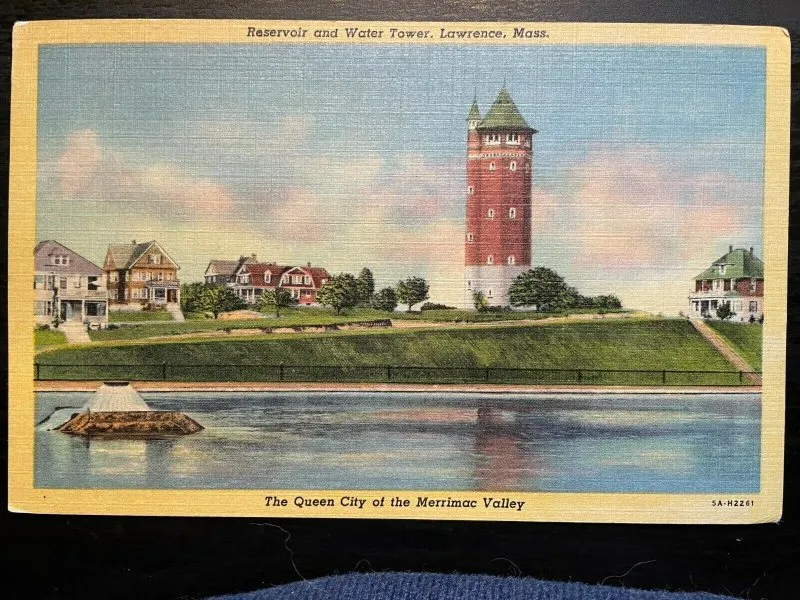 Photo: Lawrence, Massachusetts, via storage.googleapis.com
 Photo: Isaac Merritt, via www.alamy.com
Merritt's decision was purely practical. He needed consistent production, and rotating schedules were becoming unmanageable. What he didn't anticipate was how quickly his non-Jewish workers would demand the same arrangement. Within months, his entire workforce was lobbying for Saturday off, regardless of their religious obligations.
The mill owner found himself in an unexpected position. His simple scheduling solution had accidentally created the template for what would become America's standard weekend. But in 1908, the concept seemed radical—even dangerous to industrial productivity.
The Productivity Paradox
Merritt's experiment yielded surprising results. Despite losing a full day of production each week, his mill's efficiency actually improved. Workers arrived Monday more energetic and focused. Accident rates dropped. Most surprisingly, overall output remained nearly constant as workers compensated for the lost day through increased productivity during their five working days.
These findings caught the attention of efficiency experts who were revolutionizing American industry. Frederick Winslow Taylor's scientific management principles suggested that well-rested workers produced more per hour than exhausted ones. Merritt's accidental experiment provided real-world proof.
But the implications extended far beyond factory floors. Merritt had inadvertently created something unprecedented in industrial society: guaranteed leisure time for working-class families. His Jewish employees had used Saturday for religious observance, but other workers began using their day off for family activities, personal projects, and—most importantly for the broader economy—shopping.
Henry Ford's Calculated Gamble
The real transformation came in 1914 when Henry Ford, facing massive employee turnover at his Detroit auto plants, decided to implement his own version of Merritt's system. Ford's motivations were entirely economic: training new workers was expensive, and experienced employees produced better cars.
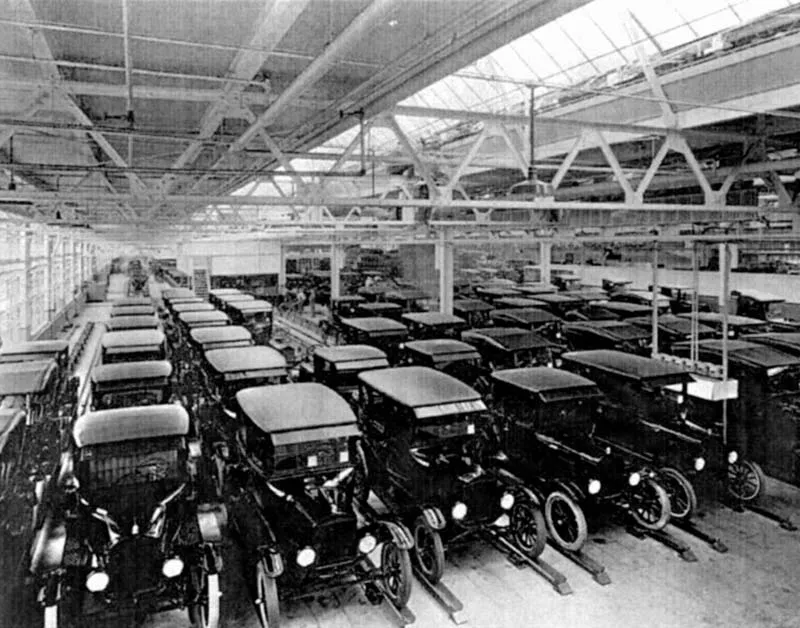 Photo: Henry Ford, via henryfordassemblylinebyrobert.weebly.com
Ford's announcement of a five-day, 40-hour work week shocked industrial America. Critics predicted economic disaster, claiming that reduced working hours would cripple production and make American goods uncompetitive globally. Labor leaders were initially suspicious, wondering what Ford expected in return.
But Ford's reasoning was brilliantly capitalistic. He realized that his own workers were potential customers for his automobiles. If they had more leisure time and slightly higher wages, they'd need cars for weekend activities. The two-day weekend wasn't worker-friendly policy—it was market expansion strategy.
The Consumer Culture Revolution
Ford's five-day week triggered an unexpected economic boom. Workers with guaranteed weekend time began purchasing goods and services they'd never needed before: recreational equipment, casual clothing, entertainment tickets, restaurant meals, and travel services. An entire weekend economy emerged almost overnight.
Retailers quickly adapted, extending Saturday hours and creating special weekend promotions. Movie theaters, which had struggled to fill seats during traditional working hours, suddenly found packed audiences on Saturday afternoons and evenings. Sporting events, previously limited to Sunday afternoons, expanded to Saturday schedules.
The automobile industry benefited enormously. Weekend trips became possible for ordinary families, creating demand not just for cars but for gas stations, roadside restaurants, and tourist attractions. What had started as Merritt's scheduling accommodation was reshaping American geography as suburbs expanded to accommodate families who could live farther from work.
The Cultural Cascade
By the 1920s, the two-day weekend had become a status symbol and competitive advantage for employers. Companies that still required six-day weeks found themselves unable to attract quality workers. Labor unions, initially focused on wages and safety, began demanding weekend guarantees as standard contract terms.
The cultural shift was profound. American families began organizing their lives around weekend activities: Saturday shopping trips, Sunday family dinners, weekend visits with relatives. Children's schedules adapted to include Saturday sports leagues and Sunday school. The rhythm of American life had fundamentally changed.
Religious institutions felt the impact immediately. Traditional Sunday services now competed with secular weekend activities. Many churches adapted by offering Saturday evening services or weekday alternatives, acknowledging that the weekend had become as much about family recreation as religious observance.
The Great Depression Test
The 1930s economic collapse tested whether the weekend concept could survive genuine hardship. Many employers attempted to return to six-day schedules, arguing that economic emergency justified longer working hours. But workers resisted fiercely, and the resistance revealed how deeply the weekend had embedded itself in American expectations.
Roosevelt's New Deal actually reinforced weekend culture through work programs that maintained the five-day standard and leisure initiatives that assumed workers had weekend time available. The government had essentially endorsed Merritt's accidental discovery as national policy.
By 1940, the two-day weekend was so established that wartime production increases focused on longer daily hours rather than additional working days. Even during World War II, maintaining weekend time was considered essential for worker morale and productivity.
The Modern Legacy
Today, the weekend generates roughly $400 billion annually in leisure spending—money that simply didn't exist in the American economy before Merritt's 1908 accommodation. Weekend activities support millions of jobs in hospitality, entertainment, retail, and transportation industries that barely existed a century ago.
Yet we rarely consider how accidental this cultural foundation was. Isaac Merritt wasn't trying to revolutionize American life or create new economic sectors. He just wanted to solve a scheduling problem with his Jewish workers. His practical accommodation accidentally gave birth to the weekend, transforming not just how Americans work, but how we live, spend, and think about the balance between labor and life.
Every Saturday morning, as millions of Americans sleep in or plan family activities, they're participating in a cultural pattern that began with one factory owner's simple desire to keep his production line running smoothly.