Too Simple for Sports, Too Stubborn to Die: How Horseshoes Conquered American Backyards
The Game Nobody Wanted to Claim
In 1869, when the Cincinnati Red Stockings became America's first professional baseball team, horseshoe pitching was already centuries old. Roman legionaries had played variations of it in their camps. Traveling circuses featured it as a crowd-pleasing demonstration between more elaborate acts. Blacksmiths tossed shoes during breaks from their anvils. But nobody—not athletes, not entertainers, not sporting authorities—considered it a real game.
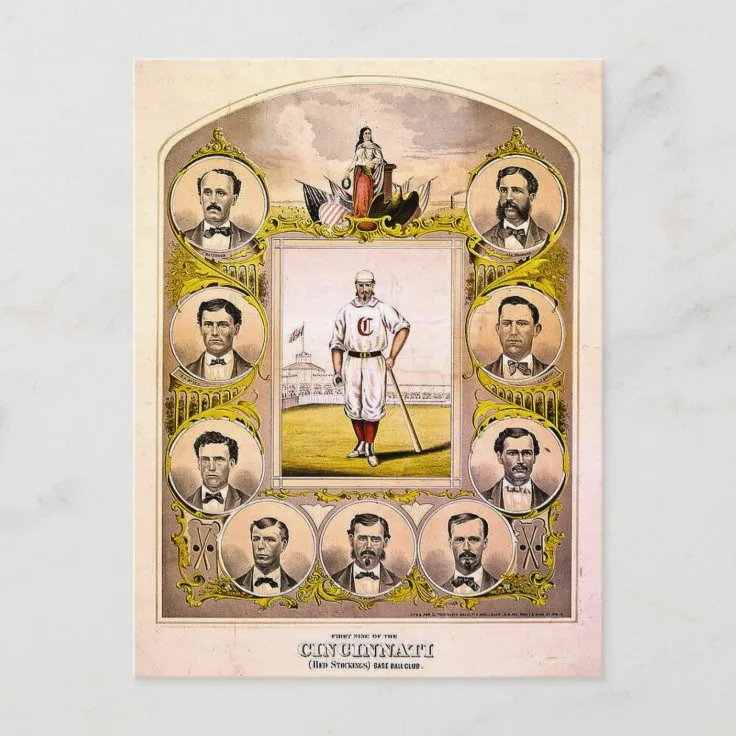 Photo: Cincinnati Red Stockings, via rlv.zcache.com
It was too simple. Two stakes in the ground, some old horseshoes, and the most basic possible objective: get your shoe closer to the stake than your opponent's shoe. No complex rules, no specialized equipment, no governing body to determine proper technique. For a nation that was rapidly formalizing its recreational activities into organized sports with official regulations and professional leagues, horseshoes seemed like a relic from a more primitive era.
Yet this game that nobody wanted to take seriously refused to disappear. Instead, it quietly embedded itself so deeply into American culture that today, you can find horseshoe pits at family reunions, church picnics, summer camps, and backyard barbecues from coast to coast. The story of how this happened reveals something important about the American approach to competition and leisure.
From Circus Acts to Army Camps
The transformation of horseshoes from casual pastime to cultural institution began in the most unlikely place: military camps during the Civil War. Soldiers on both sides, facing long stretches of boredom between battles, improvised games with whatever materials they could find. Horseshoes were abundant—every cavalry unit and supply wagon needed them—and the game required no special setup or maintenance.
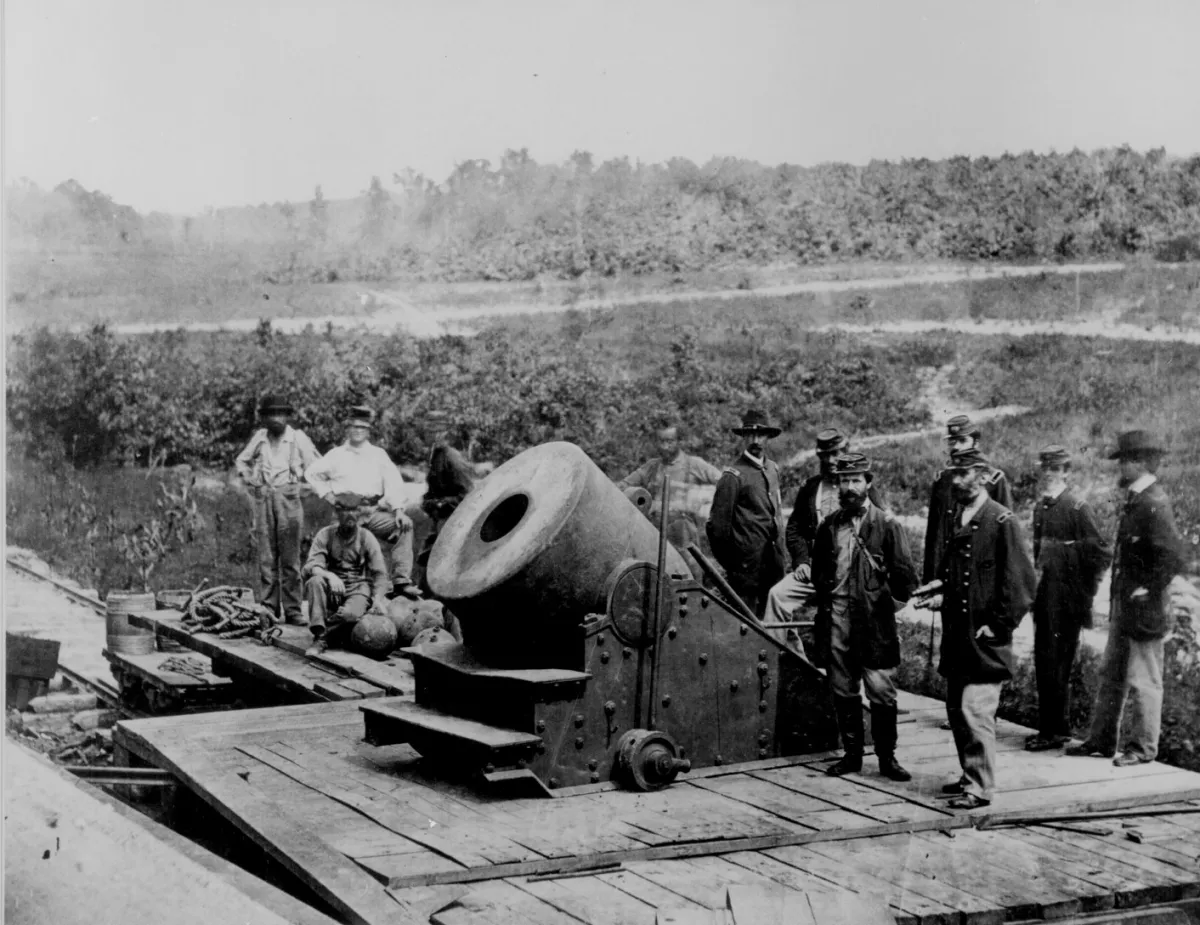 Photo: Civil War, via www.archives.gov
What made horseshoes perfect for military life wasn't its sophistication, but its complete lack of sophistication. You could play it in any terrain, with any number of participants, for any length of time. It didn't require referees, formal teams, or complex scoring. When your regiment moved camp, you just grabbed the stakes and shoes and set up again wherever you stopped.
By the time these soldiers returned home, horseshoe pitching had become associated with a particular kind of American masculinity: practical, unpretentious, and democratic. It was a game for men who worked with their hands, who valued skill over showmanship, and who preferred competition that didn't require special clothes or expensive equipment.
The Traveling Show Circuit
Meanwhile, horseshoe pitching was finding its audience in another uniquely American institution: the traveling entertainment circuit. County fairs, carnival midways, and itinerant shows featured horseshoe competitions as audience participation events—not because they were particularly exciting to watch, but because they were easy to organize and almost anyone could play.
This circus connection reinforced horseshoes' reputation as lowbrow entertainment. While baseball was developing into America's national pastime with professional leagues and newspaper coverage, horseshoes remained associated with carnival barkers and county fair prizes. It was the game you played while waiting for the main event, not the main event itself.
But this apparent disadvantage turned out to be horseshoes' secret weapon. Because it was never taken seriously enough to be heavily regulated or commercialized, it remained accessible to everyone. You didn't need to understand complex rules or invest in equipment or join an organized league. You just needed two stakes, some shoes, and someone willing to play.
The Democracy of Simple Competition
By the early 1900s, horseshoes had developed a unique position in American recreational culture. It was simultaneously too simple for serious athletes and too persistent to ignore. Professional horseshoe organizations tried repeatedly to formalize the game, standardize equipment, and establish tournament structures, but these efforts never gained the cultural momentum that elevated baseball, football, or tennis to national prominence.
Instead, horseshoes thrived precisely because it remained informal. It became the default game for situations where people wanted competition without complexity: church gatherings where multiple generations needed to play together, workplace picnics where skill levels varied dramatically, family reunions where the goal was inclusion rather than excellence.
This democratic quality—the fact that a child could compete meaningfully against an adult, that newcomers could learn the basics in minutes, that you could play casually or seriously depending on your mood—made horseshoes perfect for the American ideal of recreational equality.
The Backyard Revolution
The real transformation of horseshoes from fringe activity to cultural institution happened during the suburban boom of the 1950s. As Americans moved to homes with larger yards and more leisure time, they needed activities that could fill weekend gatherings without requiring significant investment or expertise.
Horseshoes was perfect for this new lifestyle. Unlike tennis, it didn't require a court. Unlike golf, it didn't require lessons. Unlike most organized sports, it didn't require teams or schedules or equipment maintenance. You could install a horseshoe pit in any backyard and have instant entertainment for any gathering.
More importantly, horseshoes fit the social dynamics of suburban entertaining. It provided just enough competition to be engaging without being so intense that it dominated conversation. People could play while talking, drink while competing, and include children without fundamentally changing the game. It was competition as social lubrication rather than serious athletic endeavor.
What Horseshoes Says About American Competition
The persistence and popularity of horseshoes reveals something important about American attitudes toward competition and leisure. We're often characterized as a hyper-competitive society obsessed with winning and professional sports, but horseshoes represents a different tradition: competition as community building rather than dominance assertion.
Horseshoes succeeds precisely because it's not trying to be a "real" sport. It doesn't promise to make you stronger, faster, or more skilled. It doesn't offer pathways to fame, fortune, or college scholarships. Instead, it offers something simpler and perhaps more valuable: a way for people of different ages, backgrounds, and skill levels to compete together on relatively equal terms.
This may explain why horseshoes has survived every attempt to either formalize it into a serious sport or dismiss it as outdated entertainment. It serves a function that more sophisticated games can't replicate: providing just enough structure to create genuine competition while remaining accessible to absolutely anyone.
The Enduring Appeal of the Simple Game
Today, when you see a horseshoe pit at a family gathering or county fair, you're looking at the result of a century-long cultural experiment. What happens when a game is too simple for athletic prestige but too engaging to disappear? What happens when an activity refuses to be either completely casual or completely serious?
The answer is that it finds its own ecological niche in American culture. Horseshoes has become the unofficial sport of informal gatherings, the default competition for situations where the goal is inclusion rather than excellence. It's a game that succeeds by refusing to take itself too seriously while still providing genuine competitive satisfaction.
In a culture increasingly dominated by complex, expensive, and exclusive forms of entertainment, horseshoes represents something different: the idea that competition can be democratic, accessible, and meaningful without being sophisticated. Sometimes the games that nobody wants to claim end up claiming all of us.